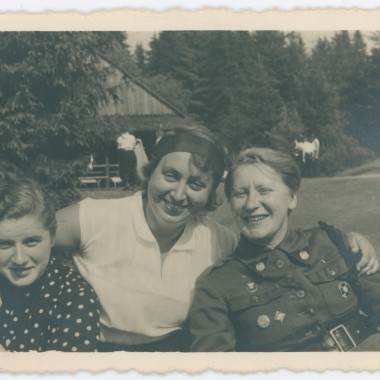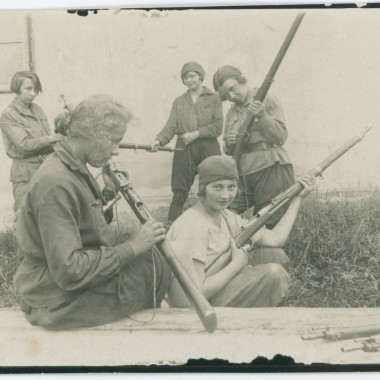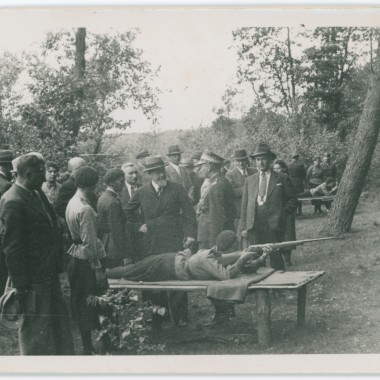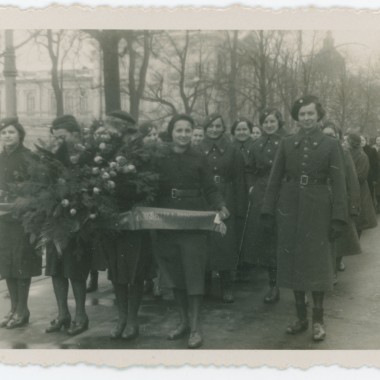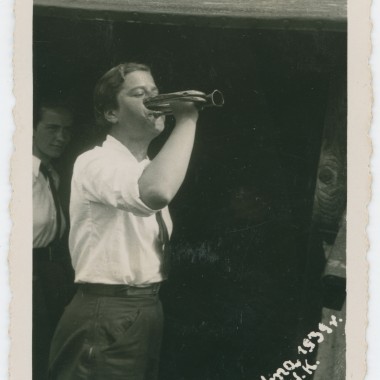




After the end of WWI there were female veterans who began efforts to establish a paramilitary women's organization in Poland. From a historical perspective, this can be regarded as an important manifestation of the struggle for women's equality — women who, after gaining voting rights, wanted to exert greater influence on the country's situation and, if necessary, defend it on equal terms with men. Their pressure proved effective: in 1923, the Women's Military Training (Przysposobienie Wojskowe Kobiet — PWK) was established. Its entire structure and educational work were oriented toward readiness for service in the event of war.
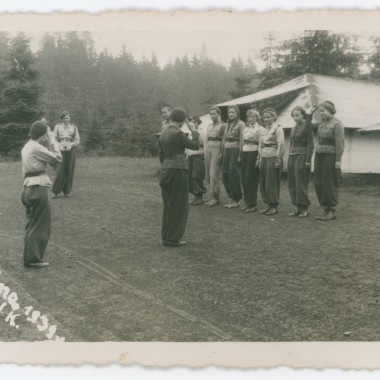
Basic training for future members lasted 150 hours and was conducted over two years. After completing it, the "Pewiaczki" (PWK members) chose one of the auxiliary military services in which they wanted to specialize. Strict, military-style discipline was omnipresent, so a volunteer's decision to join the training had to be carefully considered. The focus on the defensive education was to fully shape future female soldiers — both their physical and mental aptitudes. Training camps were particularly popular. A long stay in a disciplined group had a positive effect on integration and made it possible to conduct practical classes under the supervision of female instructors. It turned out that this form of training produced far better results than stationary classes. Sports activities and numerous field exercises developed initiative, observation skills, and resilience to hardship.
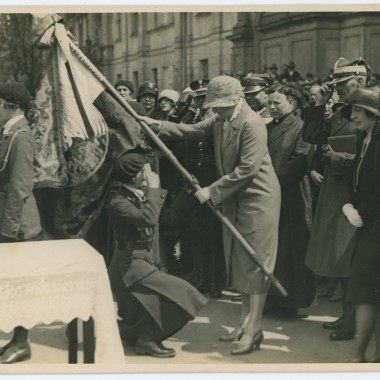
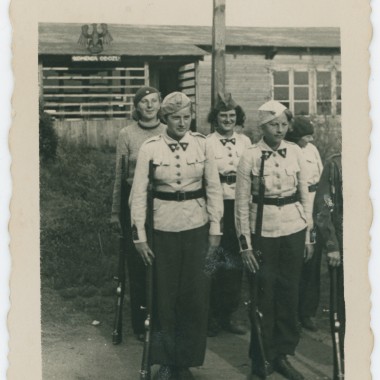
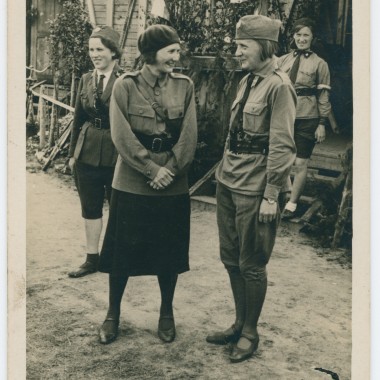
The symbols of PWK were uniform for everyone, regardless of age or social background. The banners, the anthem, and the PWK eagle fostered a sense of unity and identification with the organization's ideals. The first PWK banner, awarded to the Warsaw Branch, was solemnly blessed on May 12, 1929. The PWK anthem was the song "Marsz Pewiaczek" (March of the PWK Girls), composed in 1936 by Feliks Nowowiejski. Additionally, standardized uniforms would promote integration.
PWK members took part in all national, military, patriotic and religious state events and commemorations. A particularly strong demonstration of the organization's vitality came during the ceremonies surrounding the death of Marshal Józef Piłsudski in May 1936. The "Pewiaczki" also participated in popular sporting events, showcasing physical fitness while at the same time promoting defense-related awareness. They organized commemorative academies and bonfire gatherings, which likewise served to popularize the idea of national defense preparedness.
By July 1939, PWK had approximately 47,000 members. During World War II, most of them were involved in air defense and anti-gas protection, guard duty, communications, firefighting service, and military medical service. Many took part in the Warsaw Rising, during which some of them were killed.
After WW2, Maria Wittek and other female instructors tried to keep PWK activities alive by establishing the Section for Women's Military Training under the State Office for Physical Education and Military Training (Państwowy Urząd Wychowania Fizycznego i Przysposobienia Wojskowego). Changing political circumstances in Poland and increasing suspicion from the authorities toward this organisation eventually resulted in the liquidation of the section in 1948.