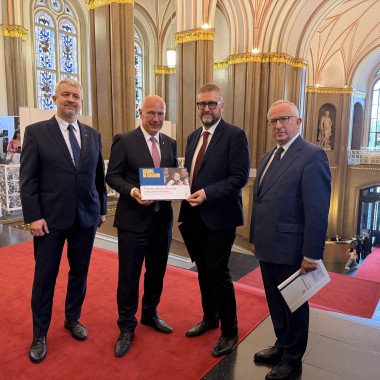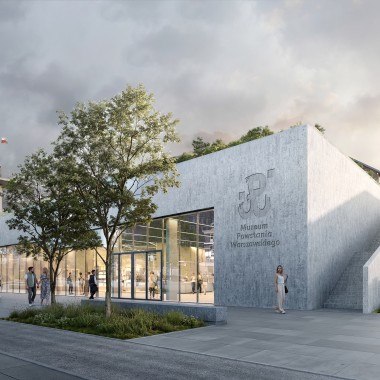



On 9 April 2026, a temporary exhibition titled “Sosabowski: Een familie verdeeld door oorlog” (Sosabowski: A Family Divided by War) opened at the Airborne Museum Hartenstein in Oosterbeek, Netherlands. The Warsaw Rising Museum provided exhibits from its collections for the show.
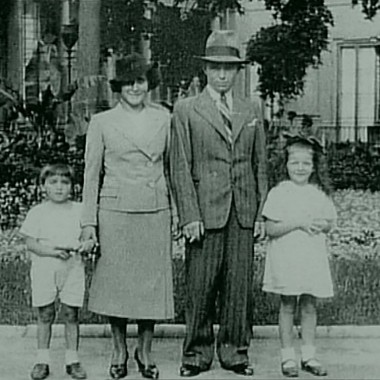
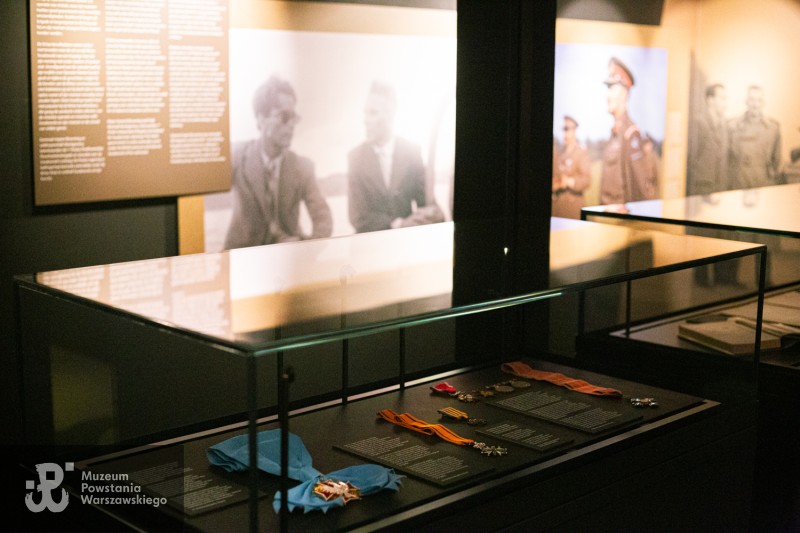
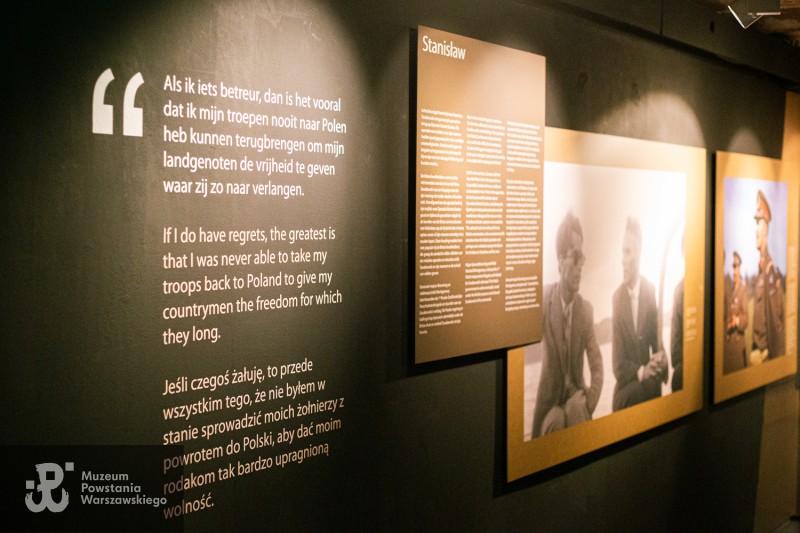
The exhibition “Sosabowski: Een familie verdeeld door oorlog” (Sosabowski: A Family Divided by War), organised at the Airborne Museum Hartenstein in Oosterbeek, focuses on the fates of the commander of the 1st Independent Parachute Brigade, Brigadier General Stanisław Franciszek Sosabowski, and his son – an officer of the Home Army’s Kedyw (Directorate of Diversion) and Warsaw Rising fighter, Stanisław Janusz Sosabowski, nom de guerre Stasinek. The curator is Prof. Hal Sosabowski, the grandson of the general and great-grandson of “Stasinek”.
The Warsaw Rising Museum supported the exhibition by lending artefacts from its collections, giving international visitors the chance to see them outside Poland.
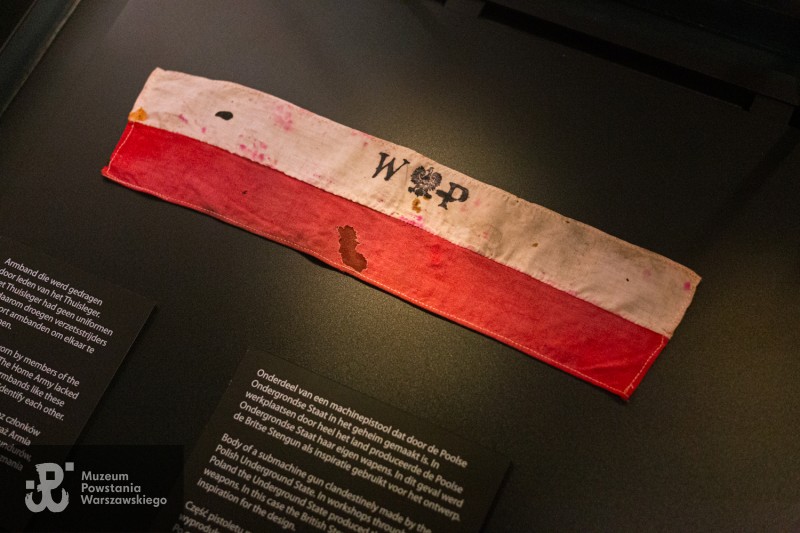
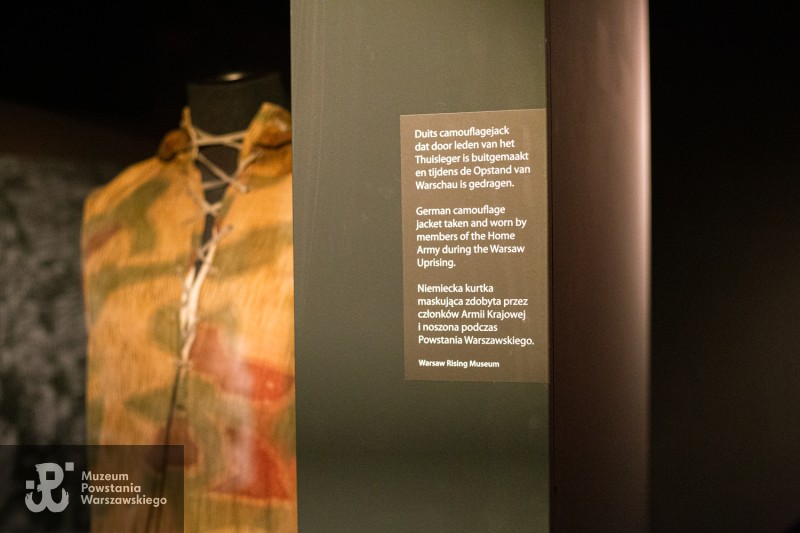
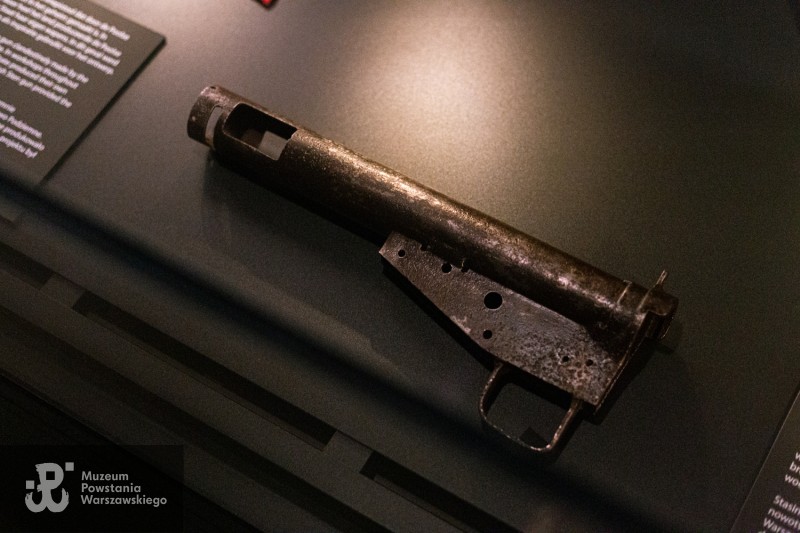
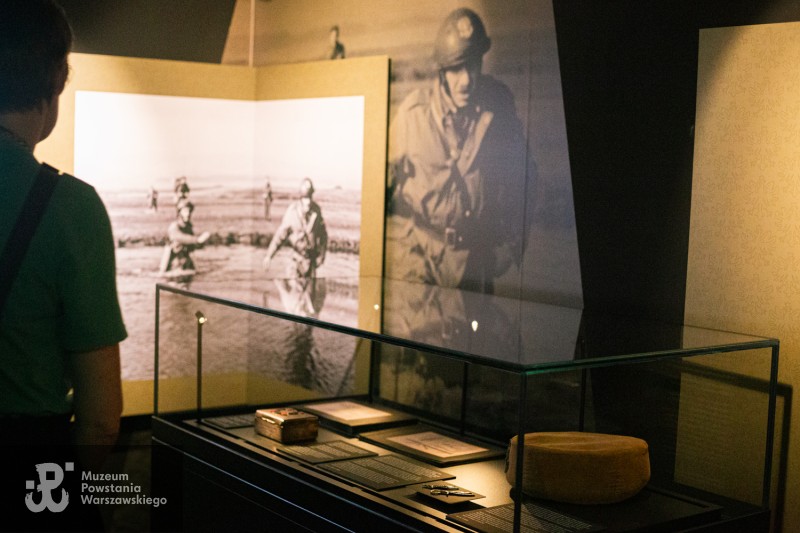
The display includes a Warsaw Rising armband, the camouflage smock (panterka) of Corporal-Cadet Jan Magdziak nom de guerre Iwański, and a semi-finished part for a clandestine submachine gun modelled on the British Sten Mk II.
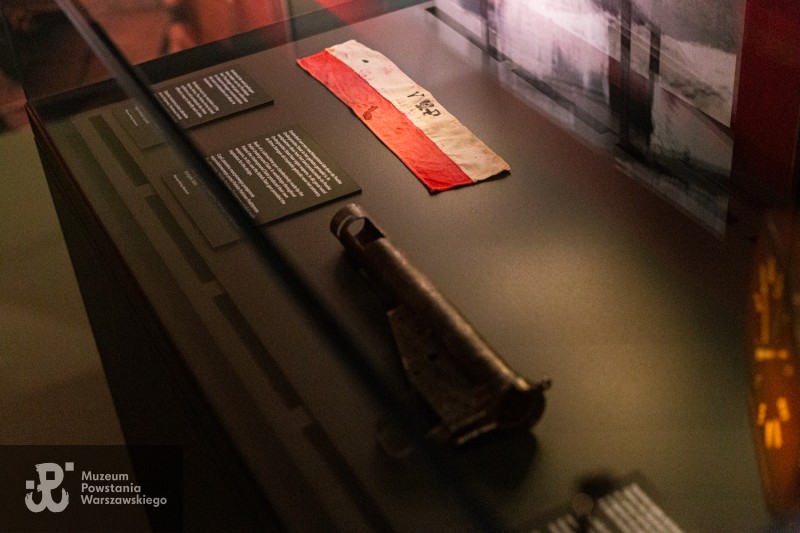
One of nine armbands discovered many years after the war during roof repairs in a tenement house at 32 Rejonowa Street (formerly probably Bema or Sowińskiego Street).
A German Wehrmacht camouflage smock (known as a panterka) used during the Warsaw Rising by Corporal-Cadet Jan Magdziak “Iwański”. The jacket is in the Sumpfmuster 43 camouflage pattern.
During the Warsaw Rising, Jan Magdziak “Iwański” fought in Śródmieście (City Centre). He commanded Platoon 171, which was part of the 4th Company of Battalion “Kiliński”. Later he served as platoon commander in Company “Watra” of the 1st Assault Battalion “Rum”.

In 1943–44, Polish Sten submachine guns were secretly manufactured at the “Konrad Jarnuszkiewicz i S-ka” bed and hospital equipment factory at 25 Grzybowska Street in Warsaw. Józef Kapler nom de guerre Jutkiewicz worked as the foreman of the tool shop in the factory. During the occupation, he was an armourer and weapons storekeeper in the 7th Company “Jowisz” commanded by Lieutenant Jan Sadowski nom de guerre Suzin. In November 1942, on “Suzin’s” orders, “Jutkiewicz” began constructing Polish Stens. The first test pieces were completed in spring 1943, and serial production started in December 1943. The Stens produced at the “Konrad Jarnuszkiewicz i S-ka” factory were supplied mainly to units of the Directorate of Diversion (Kedyw) of the Home Army High Command. A few were issued to soldiers from “Suzin’s” company and for factory protection. Approximately 180 Stens were manufactured from the start of production until the outbreak of the Warsaw Rising. During the Rising, another 84 submachine guns were assembled from parts produced before the fighting began. They were delivered to units in the Śródmieście (City Centre) district. No further production was possible because the factory was partially burned and destroyed.
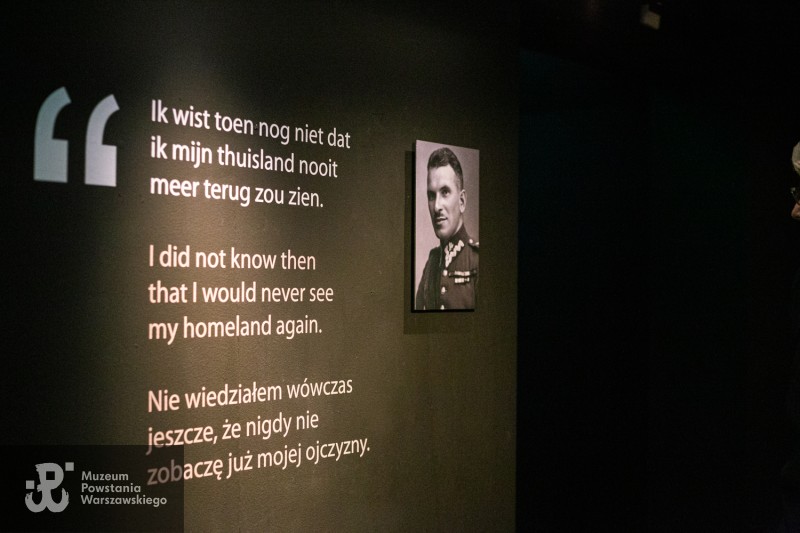
Brigadier General Stanisław Franciszek Sosabowski (1892–1967) was born in Stanisławów and deeply connected with Warsaw, where he settled in 1918. He served there for almost the entire interwar period, among other roles as a lecturer at the War College and commander of the 21st Infantry Regiment “Children of Warsaw”, at the head of which he defended the capital in 1939. After the capitulation and his escape from captivity, he became involved in the clandestine Service for Poland’s Victory (SZP). Sent as a courier to Hungary, he never returned to occupied Poland. He joined the Polish Army in France, and after its evacuation to Scotland, he organised Polish units there, including the 1st Independent Parachute Brigade, created with the intention of supporting an uprising in the homeland. He hoped to return to Poland with his soldiers by “the shortest route” – through the air – to take part in the fighting for Warsaw. By decision of his superiors, in September 1944 the brigade was dropped into the Netherlands as part of Operation Market-Garden.
His son, Stanisław Janusz Sosabowski nom de guerre Stasinek (1917–2000), took part in the Warsaw Rising. A doctor, he graduated from the Faculty of Medicine at the University of Warsaw, passing some exams clandestinely during the German occupation. As an officer of the Home Army’s Directorate of Diversion (Kedyw), “Stasinek” participated in numerous spectacular actions against the Germans. He commanded the ‘A Disposition Unit’ of Kedyw in the Warsaw District and led it during the fighting for the capital in 1944. On 4 August he suffered severe facial wounds and lost sight in his right eye (he had already lost sight in his left eye in a childhood accident). As a result, he became completely blind and was taken to St. Lazarus Hospital in Wola. His wife Krystyna managed to lead him out at the last moment, saving him from the massacre of the hospital staff. He was then transported to the Old Town and stayed at the insurgent hospital “Pod Krzywą Latarnią” at 25 Podwale Street. When the Old Town was falling, his wife guided him through the sewers to the City Centre (Śródmieście). He left the city with civilians. After the war, with his father’s help, he reached Great Britain, where he worked as a doctor. After his death, he was laid to rest beside his father in the family grave at the Military Cemetery in Powązki, Warsaw.

Photos: Justyna Grochowska / Warsaw Rising Museum