


After the end of World War II, many Polish POWs liberated from Nazi German Stalags and Oflags decided to join the 2nd Polish Corps led by Gen. Władysław Anders in Italy. Former participants of the Warsaw Rising were no different. Many chose to continue their fight, hoping that all was not yet lost.
Let us take you on a walk along the charming streets of Rome that have not changed much over the years. Polish soldiers who served in the 2nd Corps would visit the Italian capital mostly between 1945 and 1946. They must have appreciated a moment of long-awaited respite, though they were heavy-hearted, knowing they were far away from home and their fate remained uncertain.
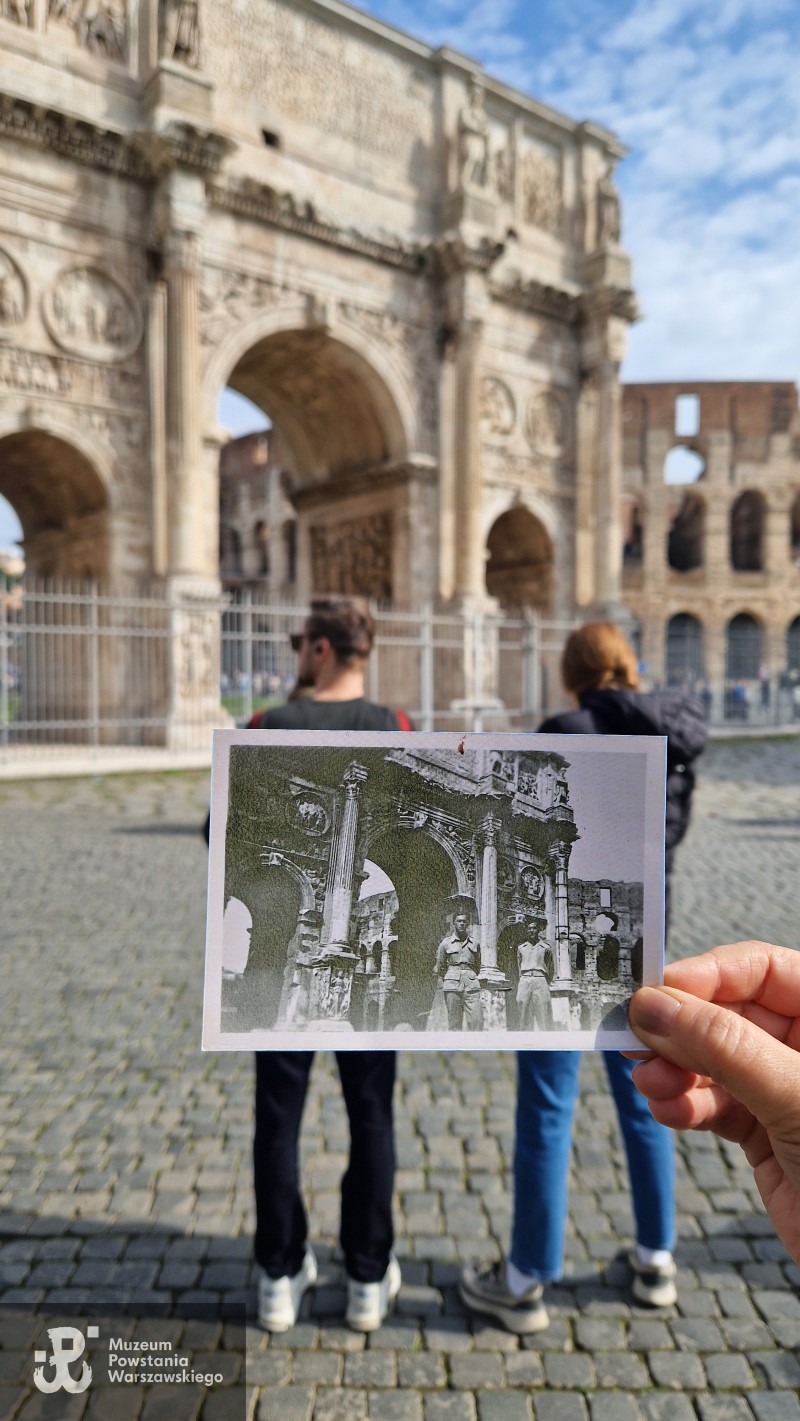
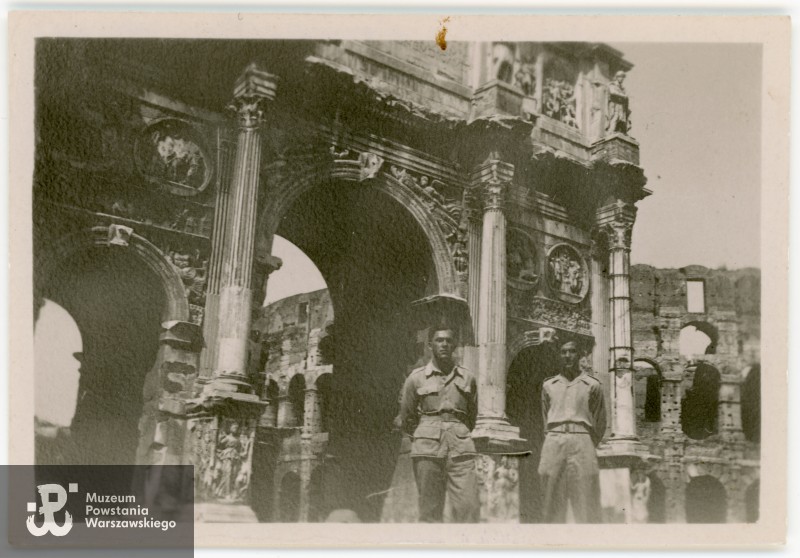
Photos: At the top, contemporary Rome (March 2026). At the bottom, Andrzej Jagielski, aka “Jodła,” with a friend during their visit to Rome in 1946. The men are standing in front of the Arch of Constantine.
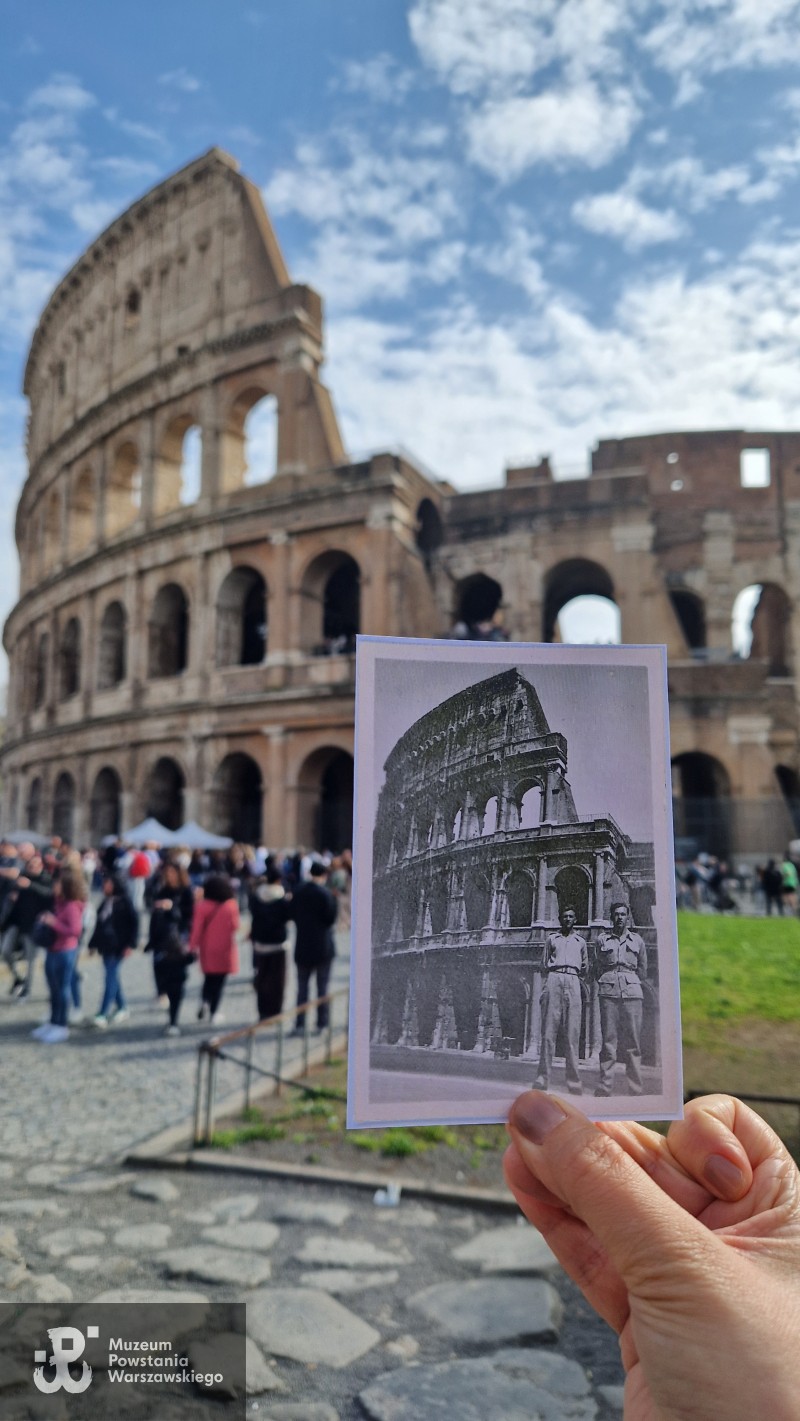
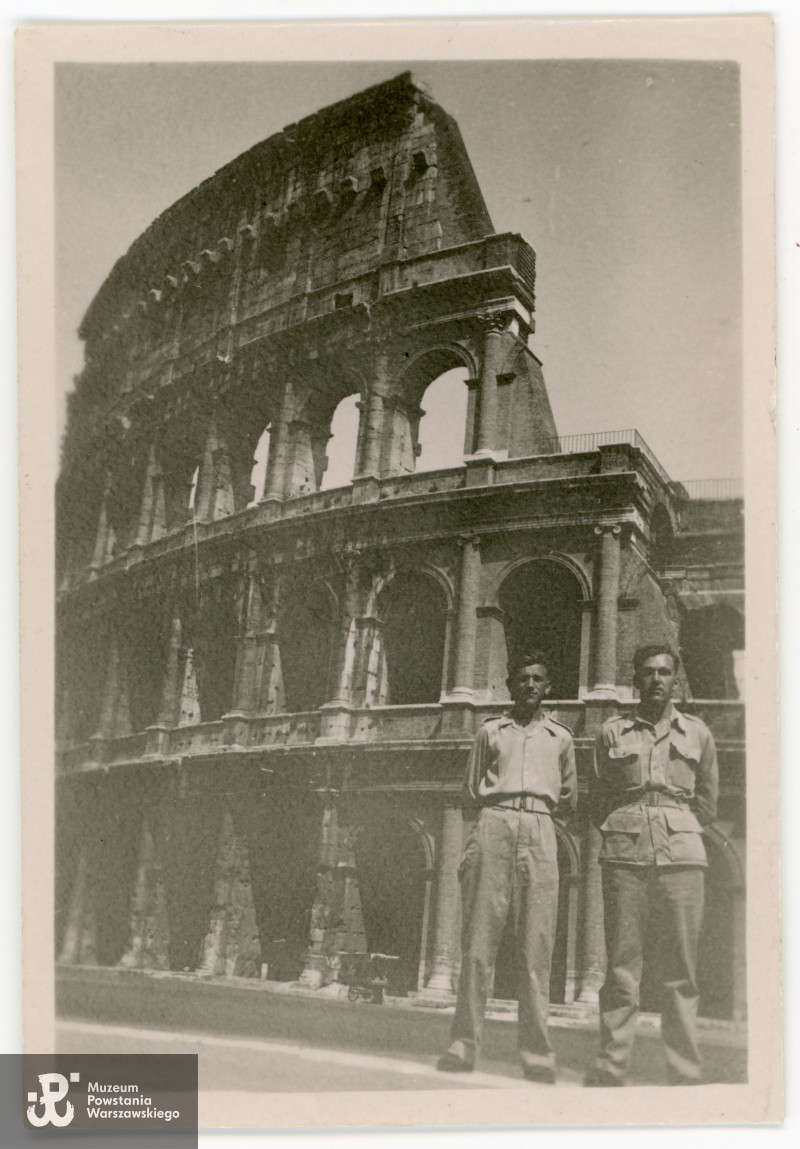
Photos: At the top, Rome today (March 2026). At the bottom, Andrzej Jagielski aka ‘Jodła’ with a friend during their visit to Rome in 1946. The men are standing in front of the Colosseum.
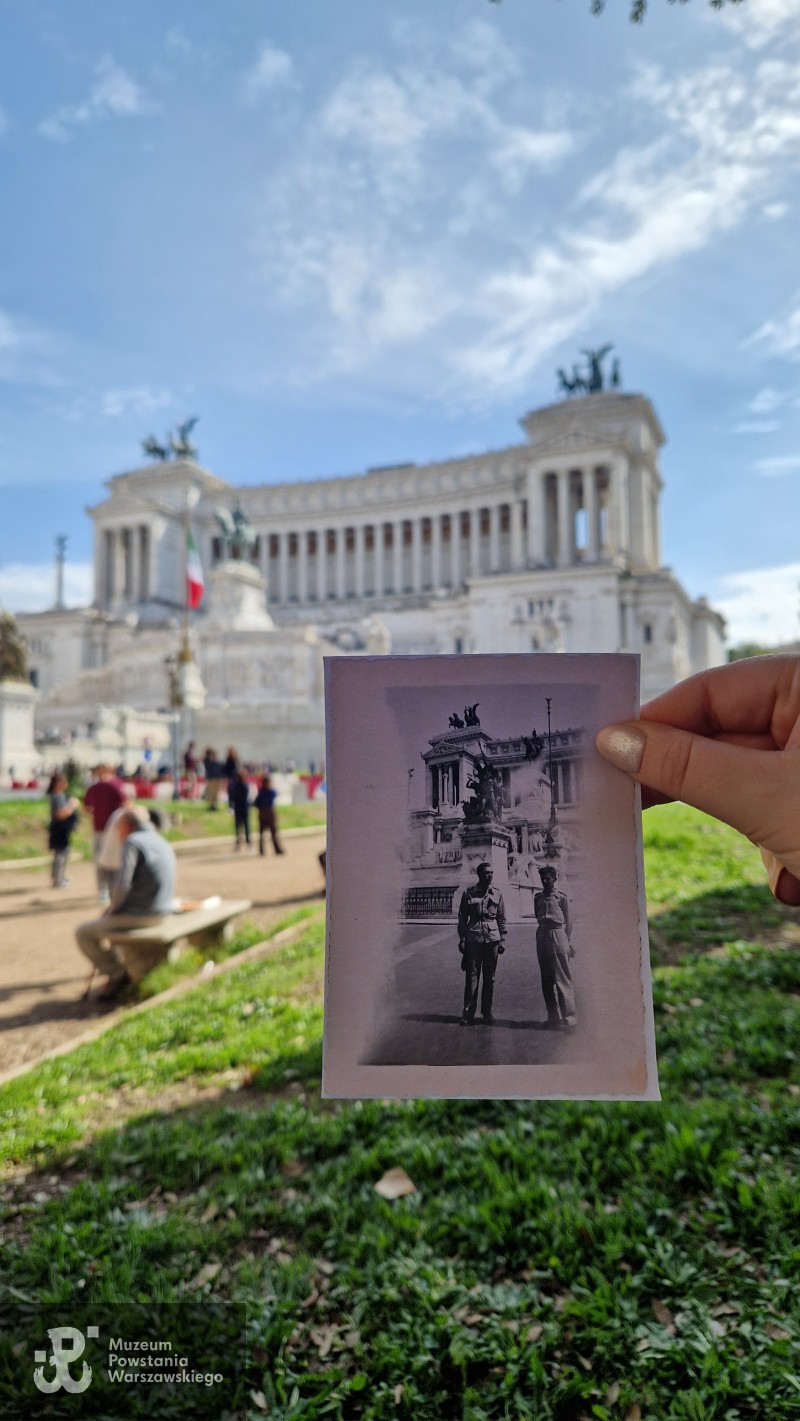
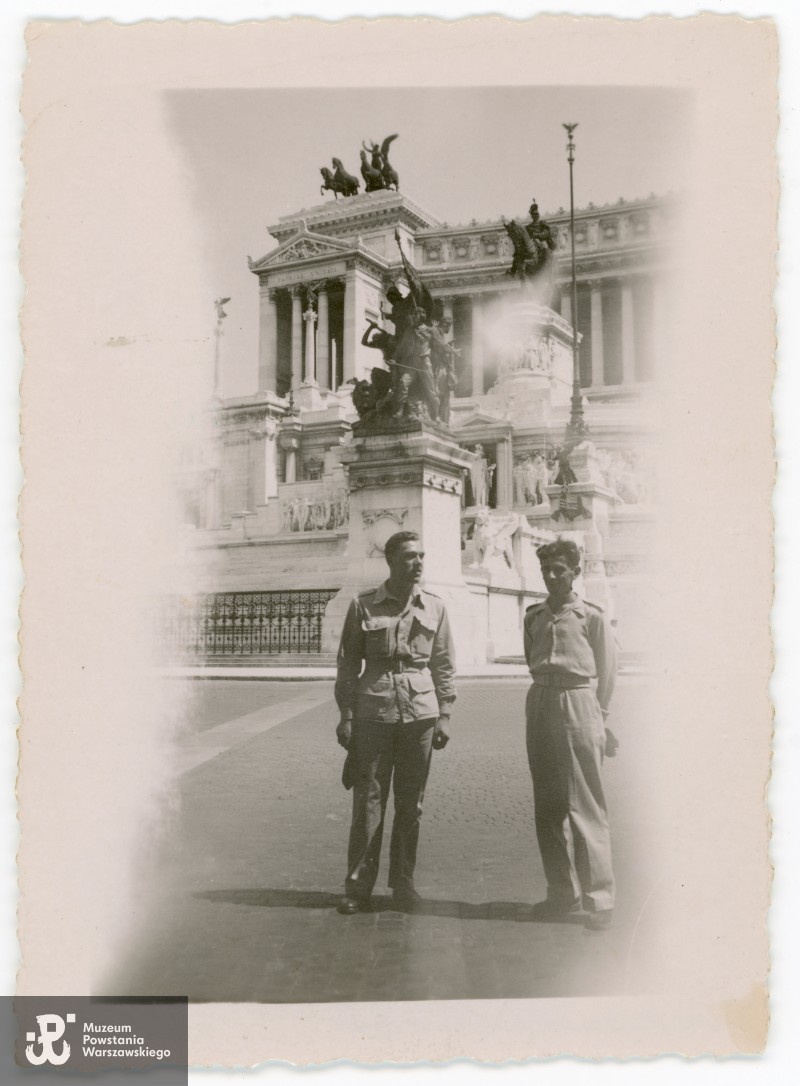
Photos: At the top, contemporary Rome (March 2026). At the bottom, Andrzej Jagielski aka ‘Jodła’ with a friend during their visit to Rome in 1946. The men are standing in front of the Vittoriano (Altare della Patria).
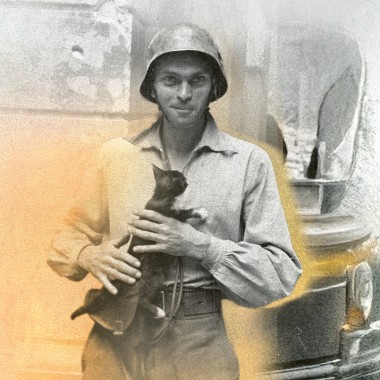
Andrzej Jagielski ‘Jodła’ (1925-2004), shown in the photos from 1946, was a 19-year-old soldier of the Warsaw Rising. He fought in the Wola and the City Centre districts under the command of Wacław Stykowski’s ‘Hal’. After the Rising ended, he was deported to POW camps: Lamsdorf, IX C Stalag Bad Sulza in Thuringia, and IX A Stalag in Ziegenhain. Forced labour in Kessel was particularly exhausting. When World War II ended Jagielski was free to decide his future. He headed to Italy to join the 2nd Corps, which, apart from military training, offered a chance to fill the education void left by the war.
His personal notebook, donated to the Warsaw Rising Museum Archive, provides tangible proof of the wartime itinerary across fighting Europe followed by these young soldiers. Andrzej Jagielski copied all the articles of the Geneva Convention as well as the full text of the Warsaw Rising’s Capitulation Act. The notebook also contains drawings depicting scenes from POW camps, a makeshift map of Northern Italy and numerous contact details for ‘new friends’ made in POW camps, Italy and Great Britain. 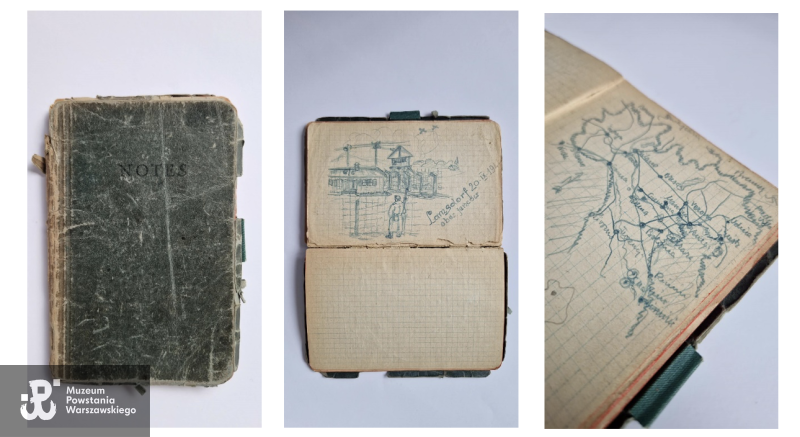
Photos of Andrzej Jagielski’s ‘Jodła’ personal notebook. Warsaw Rising Museum Archive.
Andrzej Jagielski decided to return home after a short stay in the United Kingdom. He successfully completed law studies at the University of Warsaw and pursued an outstanding academic career, becoming a professor of Economic Geography. He specialized in statistics and the geography of Africa.
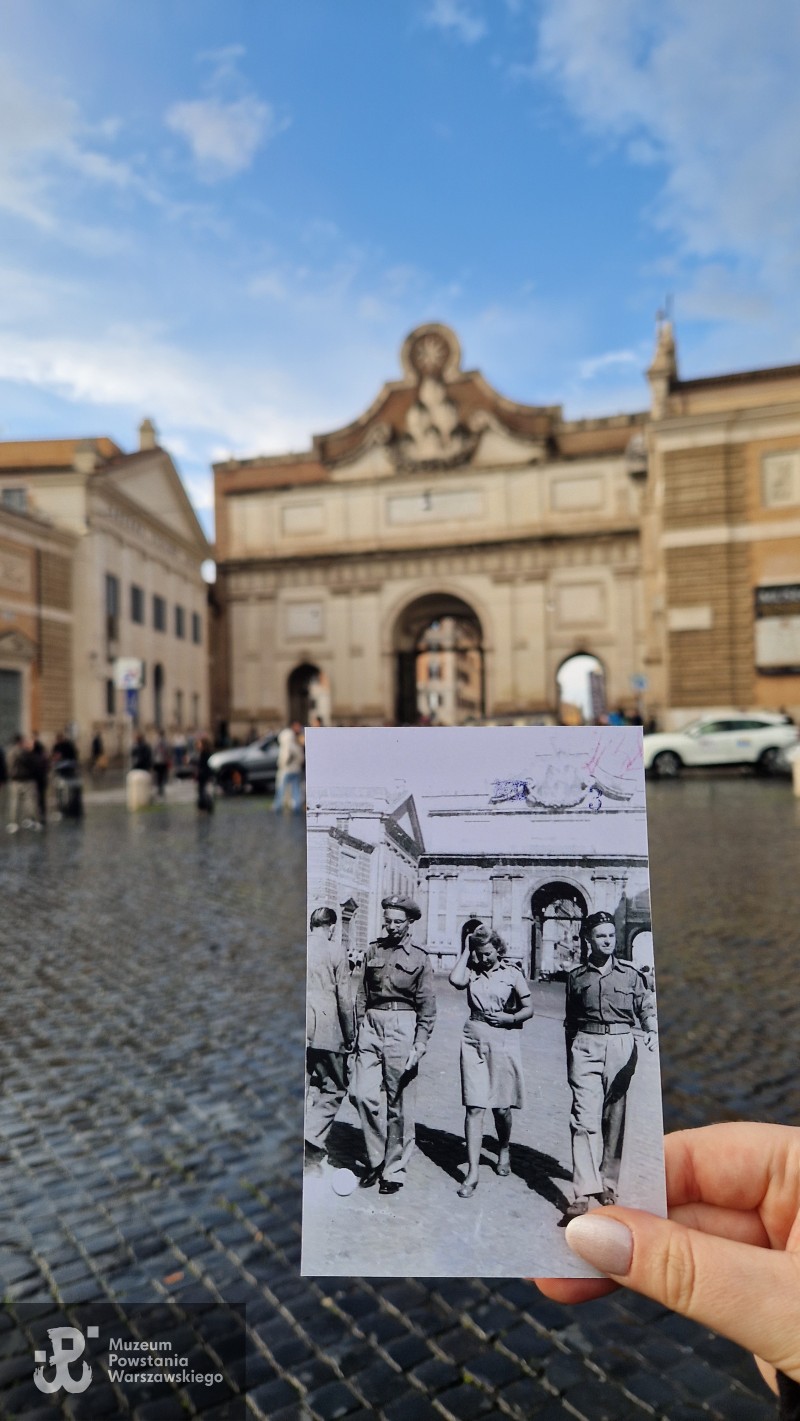
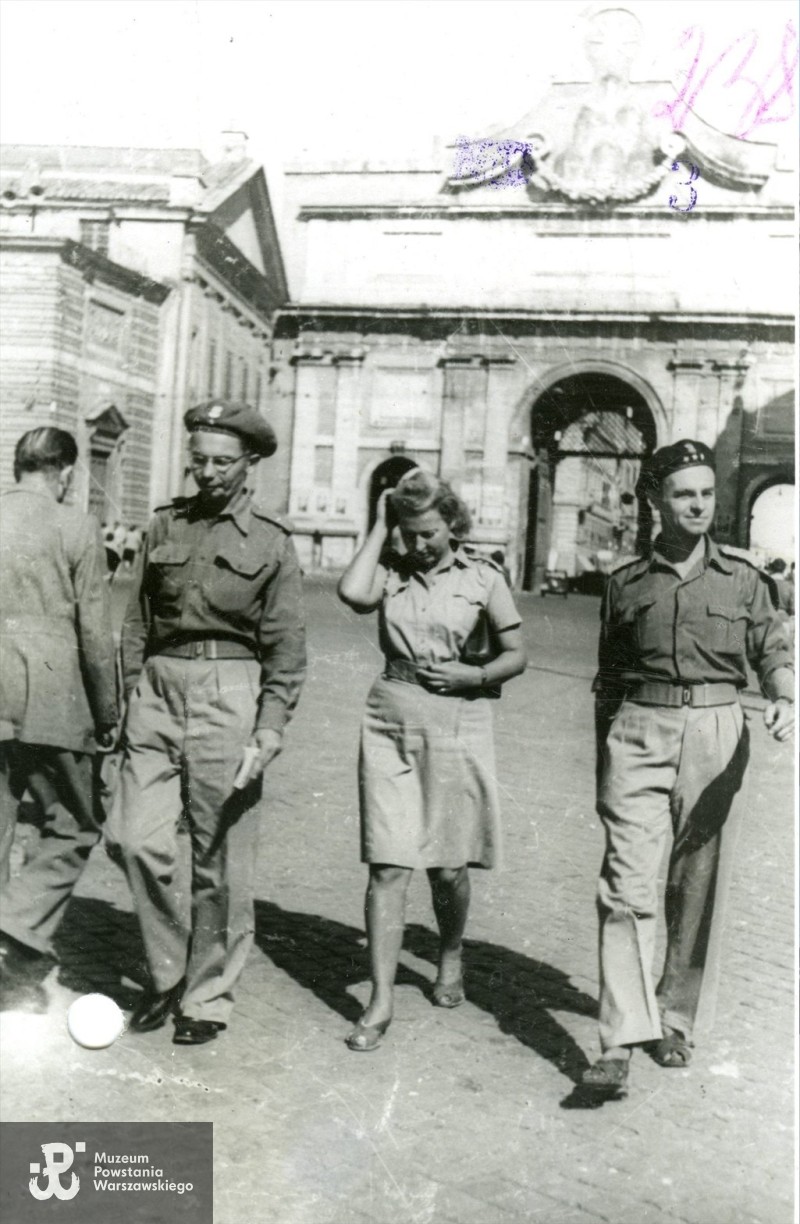
Photos: At the top, Piazza del Popolo in Rome today. The original photography from September 1945 (at the bottom) shows Marian Szyszko-Bohusz, Maria Szelągowska and Witold Pilecki in the same location.
You may well recognize the gentleman on the right. Witold Pilecki (1901-1948), regarded by historians as one of the bravest soldiers of World War II, found himself in Rome during his service in the 2nd Corps under Gen. Anders’ command. He had terrible experiences behind him: he had spent nearly two and a half years in KL Auschwitz, and after a daring escape from that hell-on-earth in April 1943, he fought in the Warsaw Rising in August and September 1944. He survived and was deported with thousands of other soldiers to German POW camps, where he awaited the end of the war. He was advised not to return to communist Poland. He refused to listen. Poland was deep in his heart, so at the earliest opportunity he embarked on that mission. Witold Pilecki’s return to ‘real life’ did not last long. On 8 May 1947 he was arrested by the communist authorities, brutally interrogated and sentenced to death a year later. His remains have not been found to this day. In the photo above, taken in September 1945, he is smiling as he walks along the sunny Piazza del Popolo in Rome, possibly dreaming of a normal life that would never come.
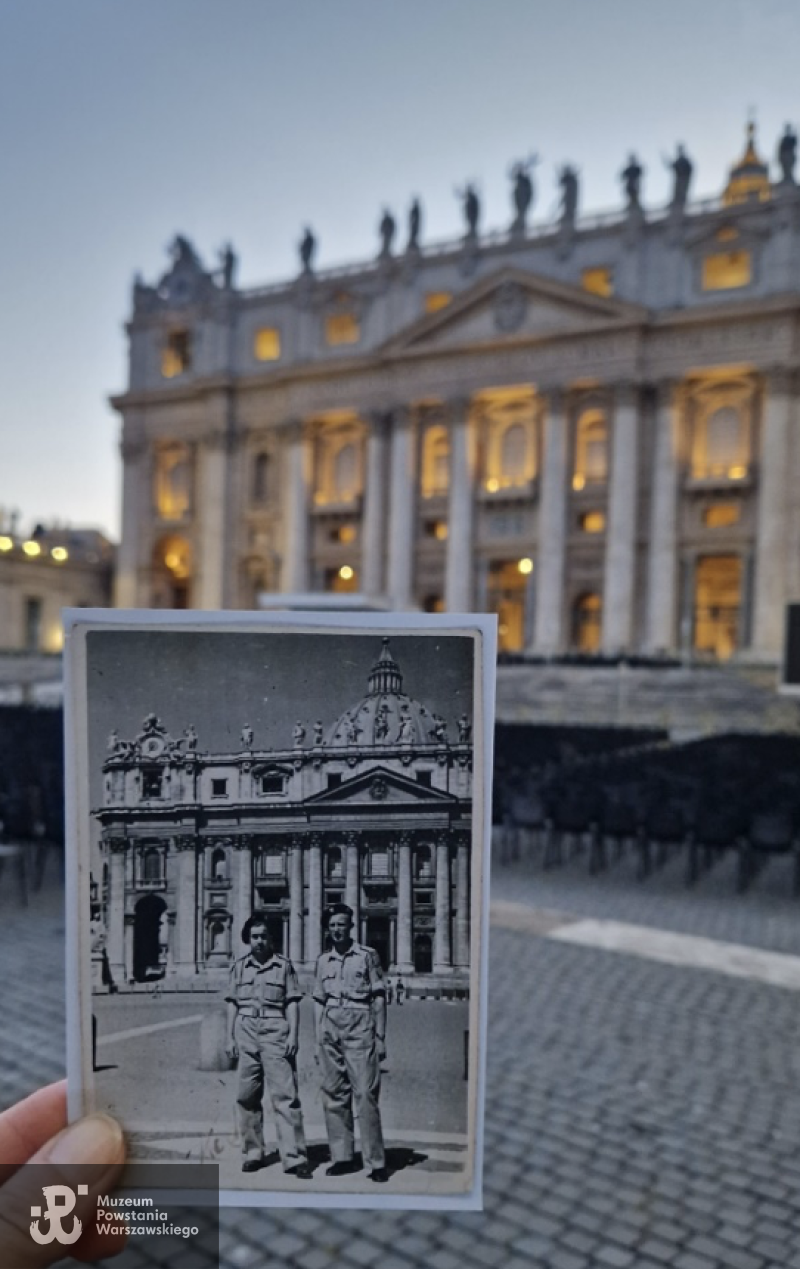
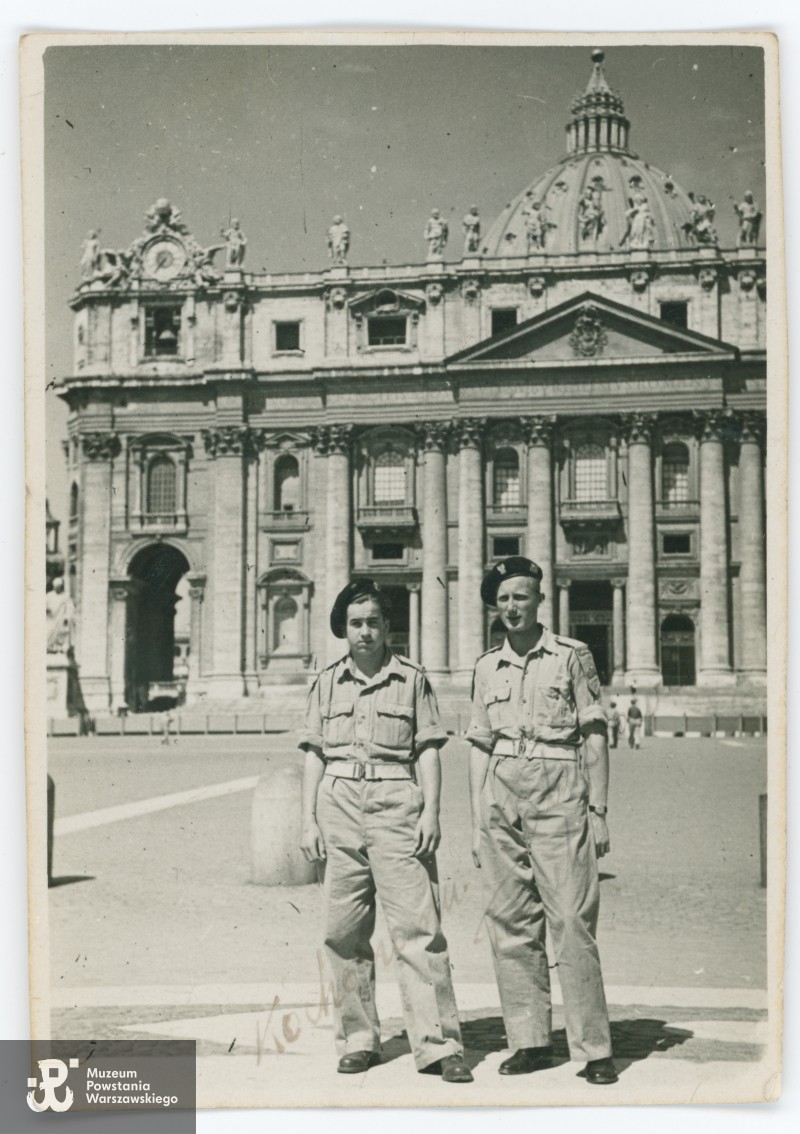
Photos: Above, St. Peter’s Basilica today. At the bottom, Tomasz Breitkopf (first on the left) in front of St. Peter’s Basilica. The photo was taken ca. 1945-1946.
Tomasz Breitkopf’s family had German roots but even after numerous Gestapo visits and straightforward incentives to sign the Volksliste at the time of German occupation of Poland in World War II, they still refused any ‘adherence’ to the Third Reich. The life of Tomasz Breitkopf aka ‘Rogacz’, ‘Rogalski’ (1926-2018) proves he managed to get his own way. Luck played a role too. He survived the Warsaw Rising where he fought under Lech Żelazny’s command; endured the hardships of POW camps and broke through enemy lines to be liberated by the Allies. He was imprisoned as a POW in Lamsdorf and Stalag XIII D Nürnberg/Langwasser.
Unbelievable as it may seem, it turned out that when the Allies were getting closer and Germans were in retreat, Tomasz underwent a surgery and his comrades evacuated him on a wheelchair from a bombed hospital. They could not drag him for very long, so they left him in a German convent where the nuns cared of him. Eventually, Tomasz Breitkopf reached Italy, where, after training, he served in the 2nd Corps. He truly disliked the atmosphere there and what amplified the bitterness even more was the fact that those who served in the 2nd Corps were advised not to write to their families in communist Poland as it could expose those in Poland to persecution by the Soviet controlled authorities. When the 2nd Corps was transferred to the United Kingdom, contact with families was restored and Tomasz learned that his family had survived the Warsaw Rising. In February 1947 he decided to return home. At first, he found it very hard to get employed.
“For me, even though I graduated with very good results, there was still the issue of the getting a job. Without a job assignment (as it was obligatory at that time), I couldn’t start working anywhere; I couldn’t even admit that I had a degree, because if I had a degree, I was supposed to have a job assignment. Finally, completely desperate, I said to my father: “You know, I think I’ll just go somewhere to the countryside. I’ll say I only have six years of elementary school; I won’t admit I have a university degree.” My father said: “You know, I have a friend at the State Commission for Economic Planning — the so-called PKPG — I’ll ask him; maybe he can help somehow.” So I went to Warsaw for a meeting with this guy. I wrote my CV. I gave him the CV, he went to the HR department. A moment later he came back pale and said: “Sir, get out of here. Don’t ever come back to me again. With a CV like that, we don’t hire people here.” Later, I had a whole series of similar stories — there was simply no work for me anywhere, I couldn’t get promoted. That’s how it went on until 1956.”
Source: Oral History Archive
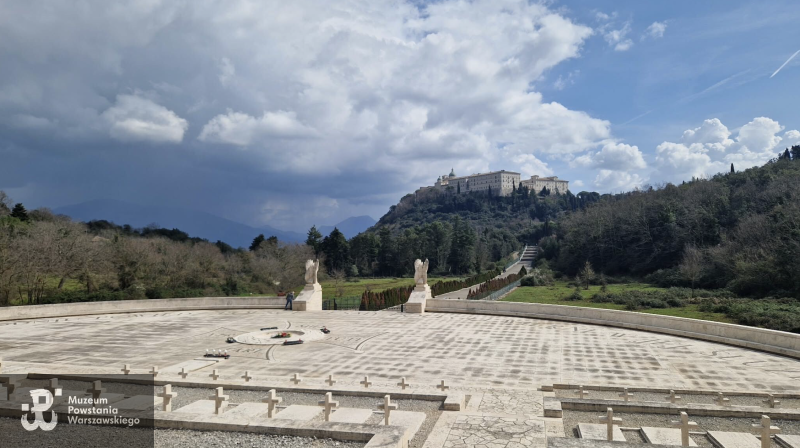
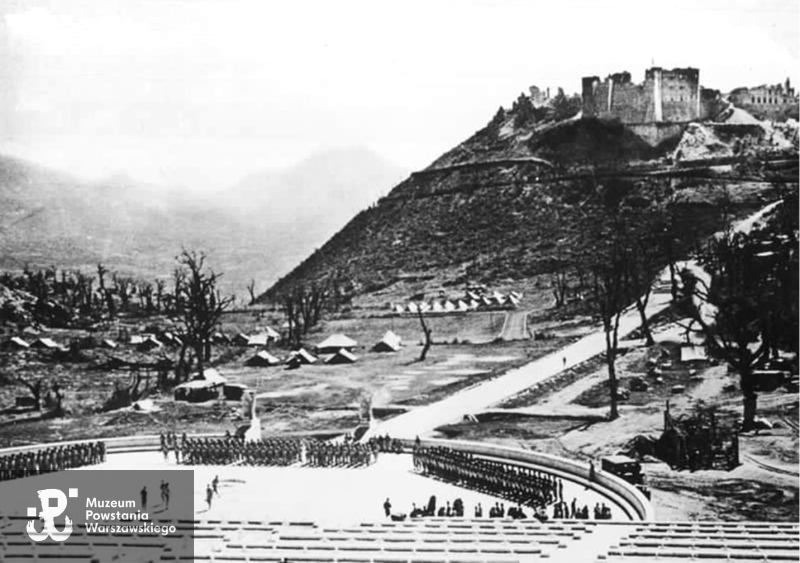
Photos: Monte Cassino now and then.
"We Polish soldiers
For our freedom and yours
Have given our souls to God
Our bodies to the soil of Italy
And our hearts to Poland."
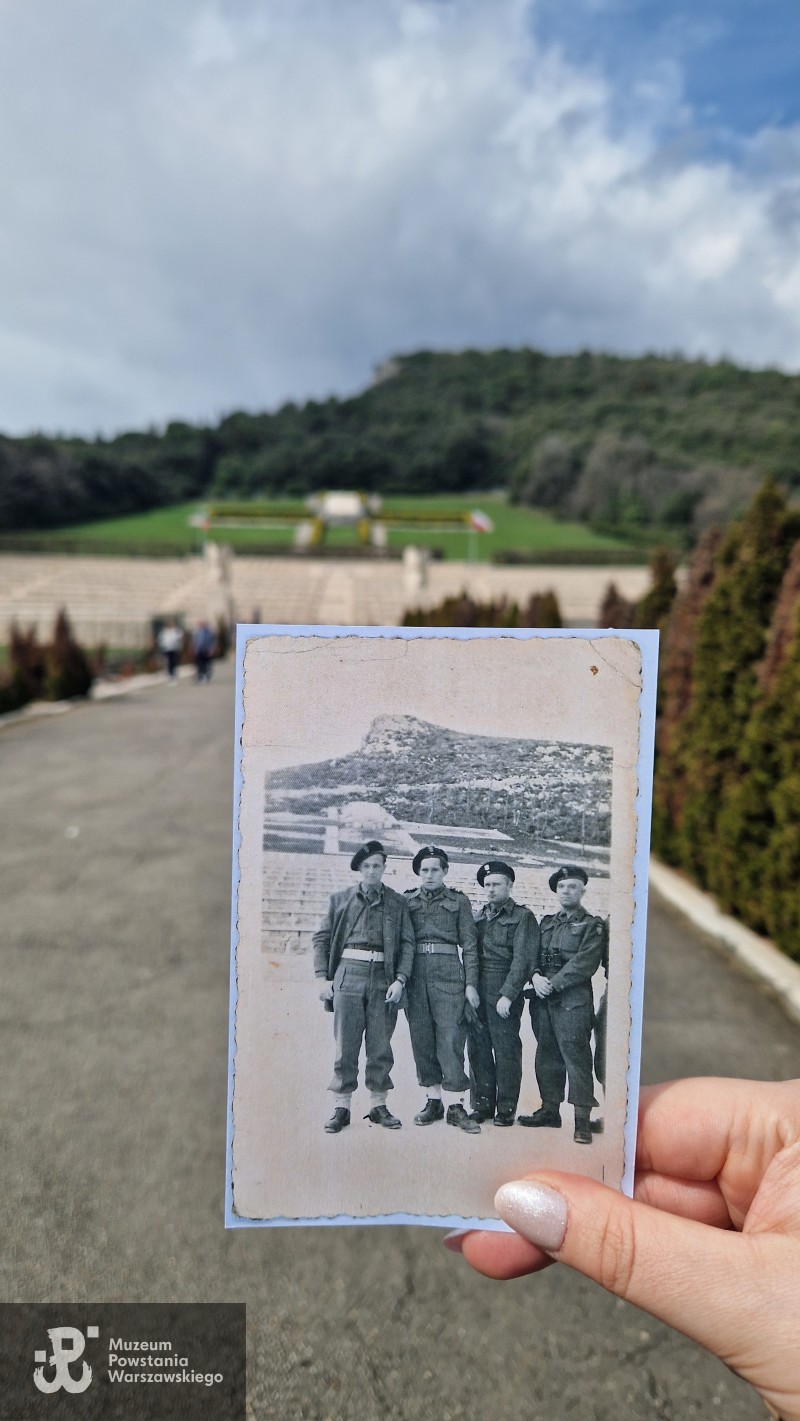
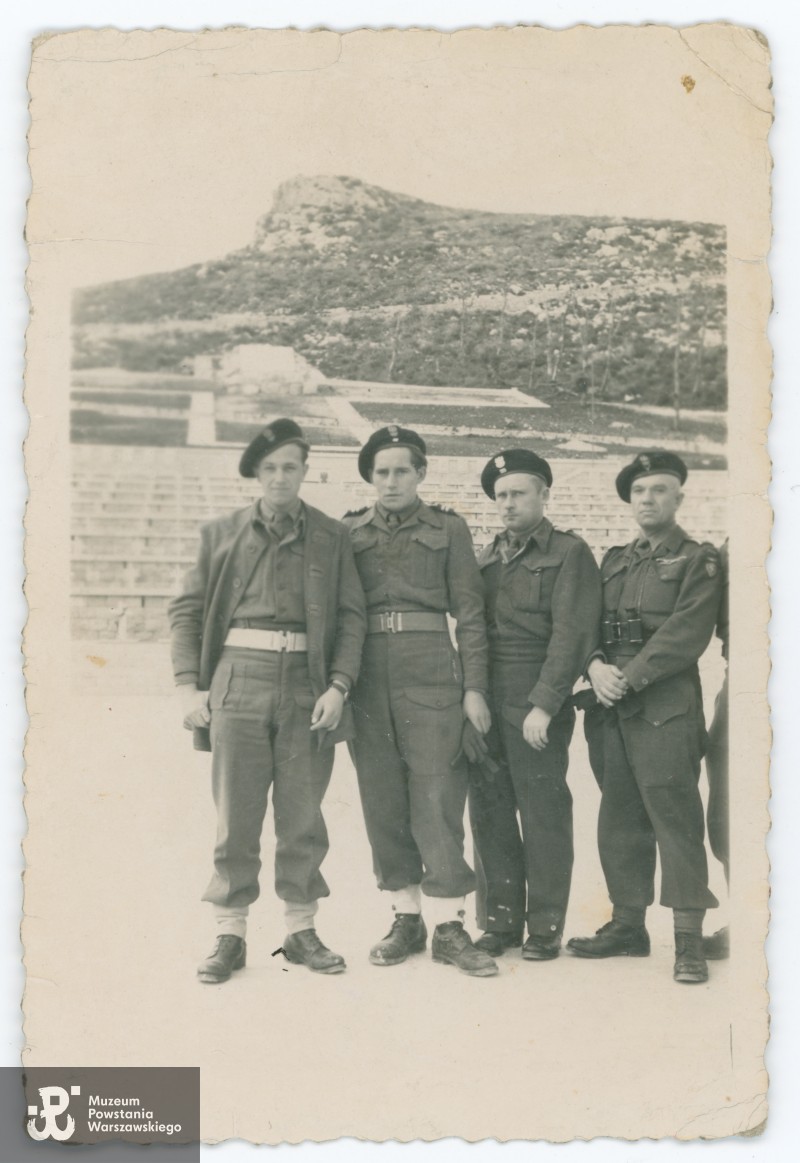
Photos: Monte Cassino, The Polish War Cemetery at Monte Cassino today. At the bottom, a group of Polish soldiers paying tribute to the fallen soldiers of the 2nd Corps who laid down their lives a year earlier, in May 1944, in the Battle of Monte Cassino. 8 November 1945. Second from the left, Jędrzej Dobrowolski aka ‘Jezior’, a Warsaw Rising soldier, who joined the 2ndCorps after being released from Stalag VII B Memmingen.
Jędrzej Dobrowolski ‘Jezior’ (1925-1989) fought in the Warsaw Rising alongside his brother Leszek Dobrowolski ‘Wrzos’ (1926-1997) in the Gozdawa Battalion. After the Rising ended, both were deported to POW camps (Lamsdorf and Memmingen) and later joined the 2nd Corps. They represent a rare case of siblings surviving together until the end of the war. In most cases, families were shattered and unable to reunite.
Until 1957, the communist authorities in post-war Poland would not allow Warsaw Rising veterans to organize official commemorations to honour insurgents and civilians killed by the Germans in August-September 1944. The Rising was embedded in national memory as a great act of resistance - a dream of freedom and sovereignty, therefore successive governments of the Polish People’s Republic, remaining under the influence of the Soviet Union, were reluctant to glorify it.
The very first official commemorations were documented by American photographer Marilyn Silverstone, who was in Warsaw at the time. Jędrzej Dobrowolski (first on the left) is one of the insurgents who were immortalized in those images.
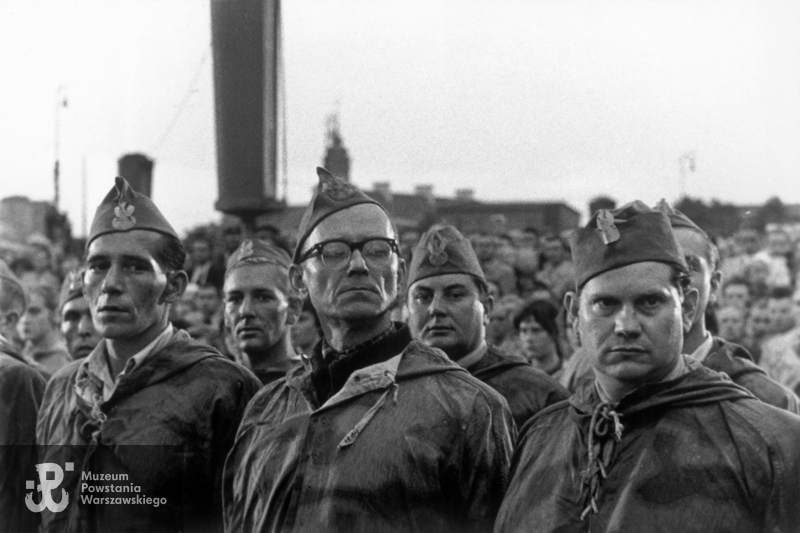
Photo: The commemorations of the Warsaw Rising in 1957. Polish veterans standing next to the Tomb of the Unknown Soldier in Warsaw. Jędrzej Dobrowolski (first on the left). Author: Marilyn Silverstone (Source: Magnum).
Anders’ Army, officially known as the 2nd Polish Corps (initially Polish Armed Forces in the East) under the command of Gen. Władysław Anders, was formed in 1941 from Polish prisoners released from Soviet GULAG camps following the Polish-Soviet (Sikorski-Mayski) Agreement. It is estimated that around 315,000 Poles were deported to the USSR between 1940 and 1941. By 25 August 1942, over 78,000 soldiers and more than 37,000 civilians had been evacuated with Anders’ Army. In May 1945, the Polish Armed Forces numbered 170,000 soldiers in the Army, 19,400 in the Air Force and over 3,800 in the Navy.
By the end of 1946 the 2nd Polish Corps had been transferred to the United Kingdom, involving the relocation of nearly 100,000 Polish soldiers and personnel. As a result, in 1946 the British Government established the Polish Resettlement Corps. Polish veterans had to choose: settle in Britain, emigrate to Commonwealth or other countries, or return to Poland. Returning home after the turmoil of the war years was a dream for many, yet it often remained impossible for years to come.
Those who returned to Poland frequently faced problems with employment and access to university education. Persecuted by the communist authorities, many were imprisoned or even sentenced to death. Serving alongside the Western Allies ‘stained’ them as enemies of the communist state. Those who remained abroad missed their families and homeland, but they could lead normal lives, earn a living, and pursue their dreams. Nevertheless, the fate of Polish generals—such as Gen. Maczek or Gen. Sosabowski, who struggled to make ends meet for years—showed that the taste of Western freedom could be truly bitter.
4,000 veterans of the 2nd Corps who returned to their pre-war homes in the pre-1939 Polish Borderlands (which after World War II fell under Soviet control in Belarus and Lithuania) were deported deep into the Soviet Union after 1951. If we recall that these people had already been deported to Siberia in 1940–41 before joining the 2nd Corps, then being deported again after the war by the Soviets was a grim twist of fate. Yet that is another story.