



Women of the Secret Intelligence: Klementyna Mańkowska - The Spy Countess
A Polish aristocrat, wanting to fight for her country, she became a secret agent of “the Musketeers”. Using her noble birth and Aryan beauty, she was able to lead the Germans by the nose, finding out the most classified secrets, and they suggested that she would join the Abwehr they sent her to England with a mission to change the alliance. This is the story of Klementyna Mańkowska, one of the five best allied secret agents in Europe.
Klementyna Mańkowska was born on the 1 of August 1910 in the small village of Wysuczka (Vysicha) in the Tarnopol region (today Ukraine). She was the second daughter of Cyryl Czarkowski-Golejewski (coat of arms Abdank) and Izabella Jaxa-Małachowska (coat of Arms Gryf). After the Soviet invasion of Poland in 1939, her father, the second Ordynat (Landowner) of Wysuczka was arrested and murdered by NKVD in 1940.
She was an aristocrat of the bluest blood, she was related to the noblest of Polish aristocratic families, such as: Plater-Zyberk, Małachowski, Sapieha, Potocki Łubieński, Mycielski, she was also related to royal families ruling Europe at the time.
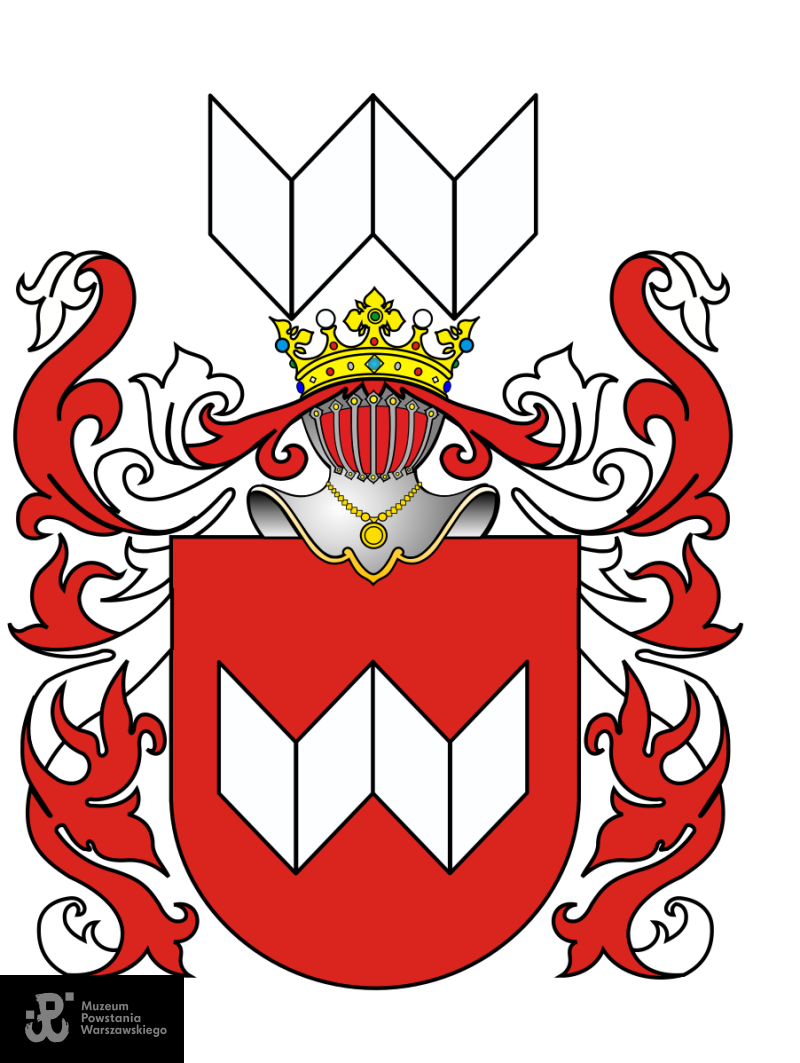
Herb Abdank. Fot. domena publiczna/All except łękawica Bastianow based on works of mr Tadeusz Gajlłękawica made by WarX This W3C-unspecified vector image was created with Inkscape., CC BY-SA 2.5, via Wikimedia Commons
The castle which was inhabited by the Czarkowski family was located on a sandy plateau, it towered over the rest of the village. The estate was bought by Klementyna’s grandfather, Tadeusz Czarkowski-Golejewski.
The beautiful aristocrat along with four other siblings had an idyllic childhood, among the sprawling vineyards, which had been created by their father in 1931. The vineyards spanned 30 hectares and they were the largest vineyards located in the Polish borderlands, they sold very good quality wine all over Europe. Cyryl Czarkowski, as a high-born man, bred horses in addition to heading a farm which provided employment to the local people.
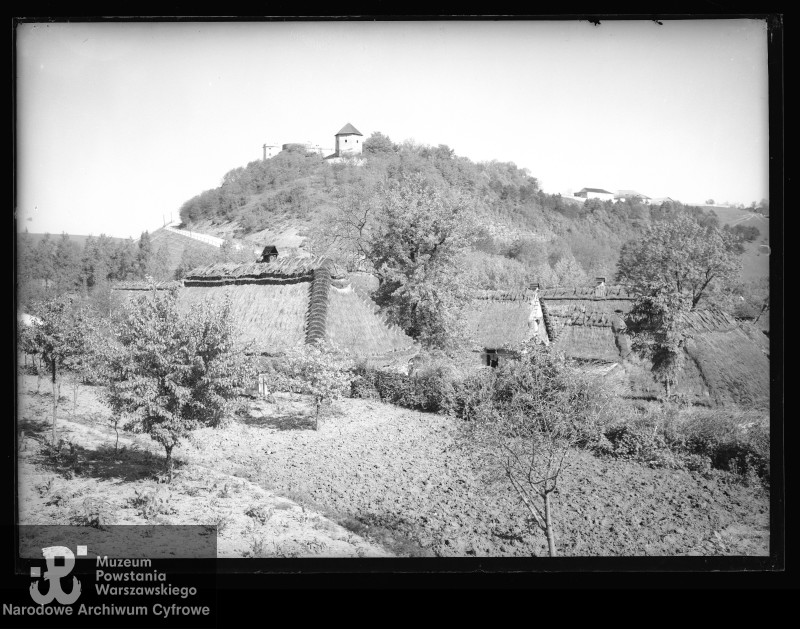
Wysuczka. View of the roofs of the village houses and castle taken in 1929. Author of the photograph unknown/ from the National Digital Archives NAC
It is 1939, and Klementyna frequently leaves to visit the estate of her sister Maria in Września in Wielkopolska (Greater Poland) region. While there she tries to forget about the tragic death of her fiancée, Emil Rudolf Bawrowski. During one such stay at her sister, she meets Count Andrzej Mańkowski, who charms her so much that she decides to marry him. Andrzej Franciszek Count Mańkowski (coat of arms Zaremba) was the owner of the estate Winna Góra located near Poznań. He was also the great grandson of one of the most famous Polish generals, Jan Henryk Dąbrowski. The estate of Winna Góra, was located on the territory of what was the Duchy of Warsaw, was granted to the general by Emperor Napoleon Bonaparte under the Treaty of Tylża (Tilsit) in 1807. The property allowed Dąbrowski not only to make up for years of legionary sacrifice but also to provide for his disabled son.
After the wedding (which took place in January of 1933) Klementyna and Andrzej move into the Winna Góra residence. Her husband with elations give his wife the responsibility caring for the family estate, while he focuses on his studies of law and economy at the University of Poznań. As a student he has very good grades, so much so that at a seminar with the distinguished economist, Professor Edward Taylor, he receives an award for his thesis on the theory of monetarism.
Soon as a result of the happy marriage, two sons are born: with the first born son Krzysztof being born 1933 while the second son Andrzej was born in 1936. In the prewar period, Count Andrzej and Countess Klementyna Mańkowska lead a life typical of aristocrats. They partake in high society life, attending parties, which they themselves also host at their own estate, during which they also meet many diplomats and ambassadors.
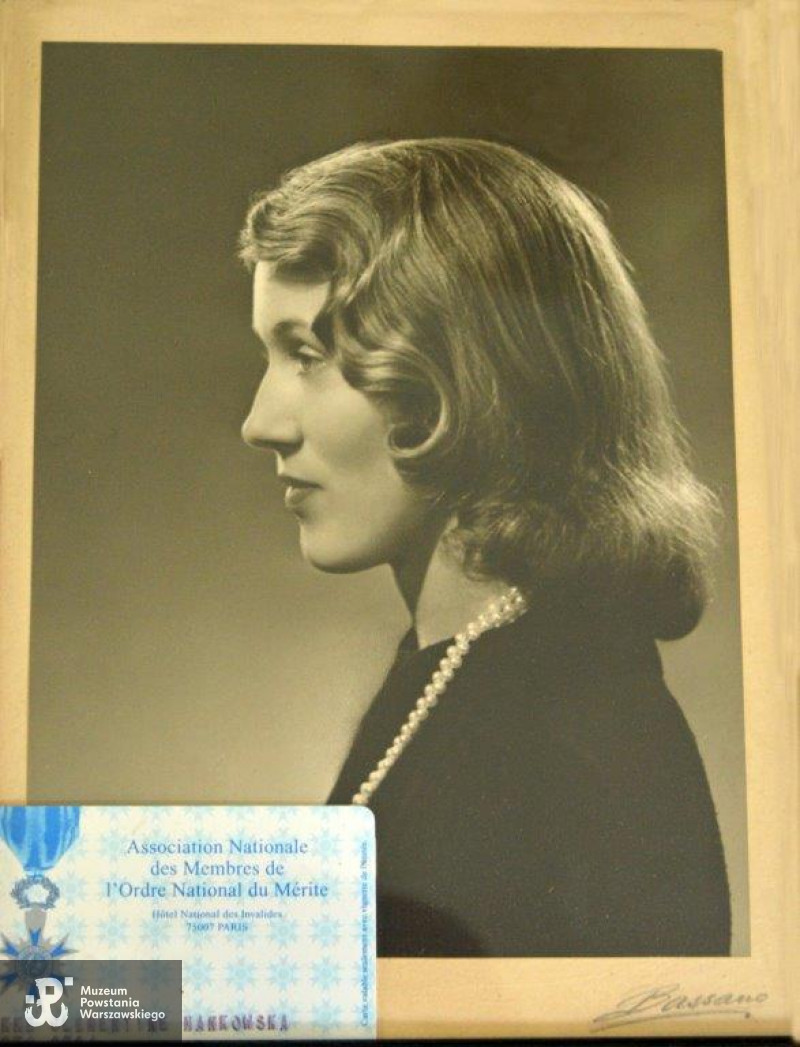
Klementyna Mańkowska. Photograph from the family archives of Krzysztof Mańkowski, courtesy of the Museum of Landed Gentry in Dobrzyca
At the end of August 1939, Andrzej is drafted into service of the 69th Infantry Regiment of the 17th Division of the Poznan Army. Wounded by his own soldiers (for trying to stop from a massacre that was to be carried out on a German officer) Klementyna’s husband is later found in September of 1939 in a military hospital in Chodaków near Sochaczew and taken back home.
In comparison with other residents of the local Winna Góra area, Mańkowska does not leave the estate following the start of World War II, she does not sent her children to live with her mother, and she does not let the staff go. On the 11th of September, 1939 in front of the Winna Góra palace two Wehrmacht cars with high ranking soldiers arrive. Their arrival was connected with the plan of taking over the Palace and turning it into their headquarters. Klementyna greeted the Germans as a proud Polish countess, dressed in a festive white dress, and holding in her hand a handkerchief with her family intials. Georg von Rothkirch and Harold von Hoepfner, were surprised by this behavior and aware of the fact that they themselves came from circles close to Polish aristocracy, they refrained from carried out the order, saying that all they needed was a single floor with simple furnishings. Unfortunately a month later, the palace would be taken over by the Gestapo, with the intention of expropriating it and presenting it as a gift to Field Marshal Wilhelm Keitel.
To save the women from wandering, Harold von Hoepfner, who had become taken by her beauty, he kneeled before her and begged her to leave with him for Rome. The Countess thanked him for the offer, but responded to him with the question: ‘’Do you really believe that an officer of the Wehrmacht would want me to abandon a man that had so bravely defended the honor of a German soldier?’’
Shortly the family is arrested and transported to a transit camp in Środa. After a week in cattle cars they are taken eastward. During a stop in the forest, one of the guards helps the family hide, allowing them to avoid deportation. They leave the train on a siding at the freight station, to get to Warsaw. They arrive at the apartment of a very close friend of Klementyna’s the Primabalerina of the Grand Theatre Olga Sławska.
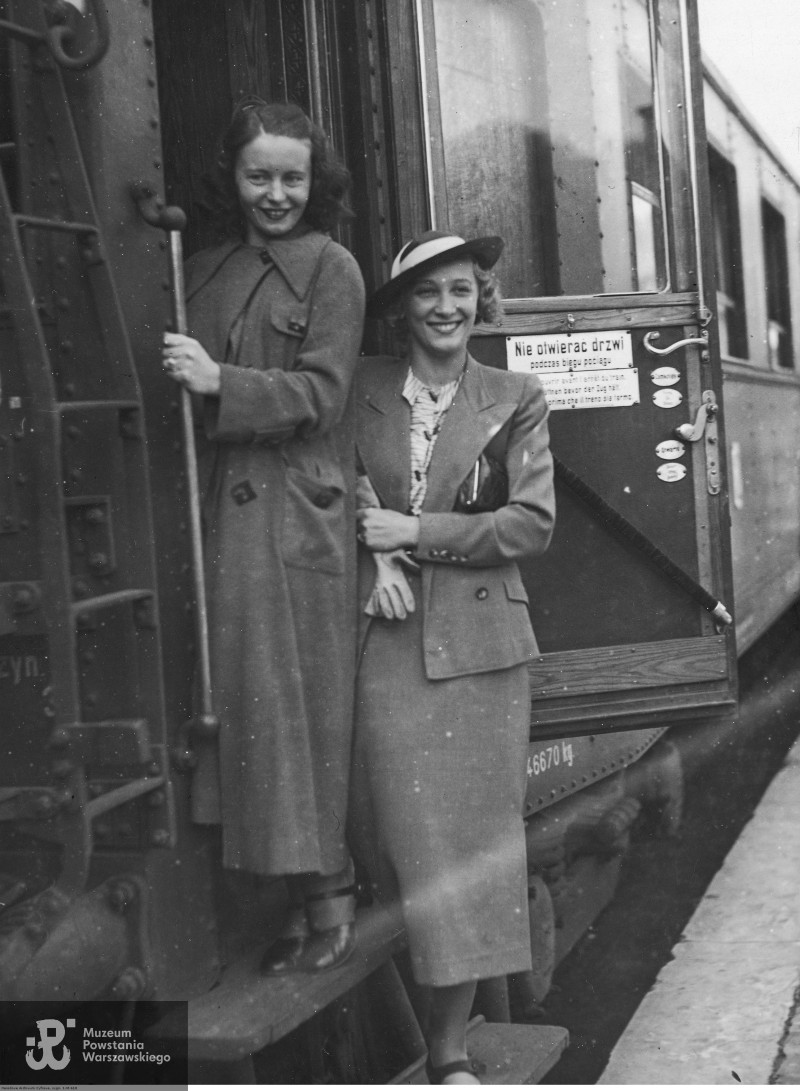
Olga Sławska (on the right) and Ziuta Buczyńska. Photograph from 1936, author of the photo unknown/ from the archives of the National Digital Archives NAC
At the end of December, 1939, the Mańkowskis move to Mokotów district to a larger apartment by 100 meters, which belongs to their cousin Teresa Lubieńska. It is located near 6 Sierpnia street, not to far from the Zbawiciela Square, the apartment is called ‘’the Salvation’’. It was in the ‘’Salvation’’ Apartment that Klementyna started a new chapter of her life. The beautiful aristocrat transformed into one of the best intelligence agents of World War II.
In the cousin’s apartment, many former officers of the Polish Army, who met in the four walls of the apartment, planned out the continued fight from the underground against the Germans. Soon the woman realizes that she has come into contact with the ‘’Musketeers’’, the very first conspiratorial organization of an intelligence nature led by Stefan Witkowski.
Klementyna quickly gains the attention of Witkowski, who sees her as an ideal addition to the organization, taking into account her aristocratic birth, Aryan beauty as well as her knowledge of foreign languages, and he proposes that she joins the organization. A deciding situation that assures Witkowski that Mańkowska has the right spy abilities was proved by this story. Harold von Hoepfner, who was captivated by the Countess, during the September stay in Winna Góra, makes a visit to her during a leave. One evening he appears in Lubieńska’s apartment in Mokotów district. With him he brings jewelry and money, in case of a sudden eviction from the palace, which Mańkowska had left in his care, however along with the items he brought something even more valuable which were information about German’s planning to attack France in May of 1940. During the innocent conversation the couple had for an hour, Klementyna tried to remember as many details as possible concerning the German plan of ‘’Fall Gelb’’. This incident leads to Witkowski deciding to send her to the French Island of Noirmoutier on the coast of the Atlantic. Her mission is to organize communication with the Polish government-in-exile in the event France would fall to the Germans. Along the way, in the Polish Embassy in Rome, she meets with military attaché Marian Romeyko, who from 1942 will be leading the Polish-French web of spies known as Réseau F2. She give him, hidden in the handles of the valise, a microfilm, photographs and reports concerning the among others, German war plans in the West.
After arriving on the French Island, the countess receives the job of a translator in the German commander’s office as well as the port office. The port in Saint-Nazaire is the largest launch base for German U-boats on the Atlantic. Here, German submarines which operate in the Atlantic are brought over for repairs, among them is also the infamous battleship ‘’Tirpitz’’ which the Allies are searching for. The Countess who is assisting the military personal as a translator during inspections of the base, tries to memorize everything the best she can, as well as what she sees. On a napkin she draws out a sketch of the buildings areas of air defense and ships. She memorizes their serial numbers, pays close attention to their interior- the layout of the rooms and the German staff.
Thanks to the information that Mańkowska gained the British organize an operation under the name of ‘’Chariot’’. On the 28th of March 1942, the British destroyer HMS ‘’Campbeltown” floats in to the port in Saint-Nazaire with explosives on board. The German defensive positions in the port area and most of the infrastructure were destroyed, which put the port out of operation for the next five years.
Klementyna continues her spy mission even after work hours, which as would turn out would become quite helpful. One evening, seeing in the hotel reception area two high ranking German officers, who were trying to secure a reservation but with no success. Klementyna approaches them and in impeccable French, helps them to register at the hotel. The grateful Germans, as gratitude invite her to the best restaurant in the city. Dinner coupled with wine allows for honest conversation to take place, and Klementyna introduces herself as a Polish refugee, working at a German office, who husband has left for Brazil, and she is alone with her children. Being alone among the hostile French, she does not feel safe. Moved by the plight of the beautiful women, the Germans that same evening, formulate a letter of recommendation with official stamp of the Oberkommando der Wermahrmacht (the High Commander of the Wehrmacht). This stamp design will help Witkowski in falsifying documents, which are extremely important for secret agents during travel across Europe.
In march of 1941, Mańkowska is arrested by the gestapo in her home on the French Island. Not sure what could to be the reason for the arrest, she keeps up appearances, using audacity as well and self-confidence.
Before the interrogation, in the Gestapo office in Paris… she demands a hardy breakfast- being hungry she will not be able to focus her thoughts and answer questions. The charm and charisma of the Countess have the wanted effect, as immediately she is served an opulent - for prison standards - meal with a glass of red wine.
During the questioning, she finds out that she is accused of helping Polish soldiers, who have remained on the territory of France, which she vehemently denies. The following day, she is released. As she is leaving, she receives apologies for the incorrect arrest, she also points out to the officials the mess they have among their paperwork. She returns home in the first class car of a train. Fare is covered by the gestapo.
After returning home to the Island, she is visited by chance by her OKW (Oberkommando der Wehrmacht) acquaintances. They came to say goodbye as they are leaving for East Prussia, from which an attack on the Soviet Union shall be carried out. This is extremely important intelligence information, which Klementyna she will expand upon, after searching the rooms of the generals, as they are out walking on the French plaza as part of military orders. The report has to be delivered as quickly as possible to Witkowski, which leads to Klementyna asking for some time off at her job. She is given time off without any problem, and with letters stamped with the OKW symbol, which will protect during her travel, she leaves for Poland. During her two day break while travelling she decides to visit an old family friend Rudolf von Schelihe in Berlin. Schelihe was the former counsellor of the German Embassy to Warsaw, who as a very keen huntsman, participating in the many huntings organized in the Countess’s family estate. Schelihe was always a great friend to the Poles, and now being linked to the opposition, he does not hide his anti-Hitler stance.
Schelihe opens next to her the briefcase, marked with the label ‘’secret’’. Inside there are documents, that cover German war crimes in Poland, as well as plans for building another German Concentration camp in Treblinka. Mańkowska reads over all of them half a year before the conference in Wannsee, and she is the first foreigner, who will find out about German plans of mass-extermination. This information shook her to her core. After many years she said: ‘’I believed that even in the most evil hearts you could find at least a drop of warmth, even deeply hidden truth.(…) And suddenly my belief was shaken, so truly there are evil people?’’
The materials as well as Klementyna’s verbal report brought to Warsaw are summed up by Witkowski in two words: ‘’That is unbelievable!’’ The report is immediately sent to England, and the stamp design will end up in the forgery department of the Plater-Zyber brothers, located in a Warsaw photographic studio.
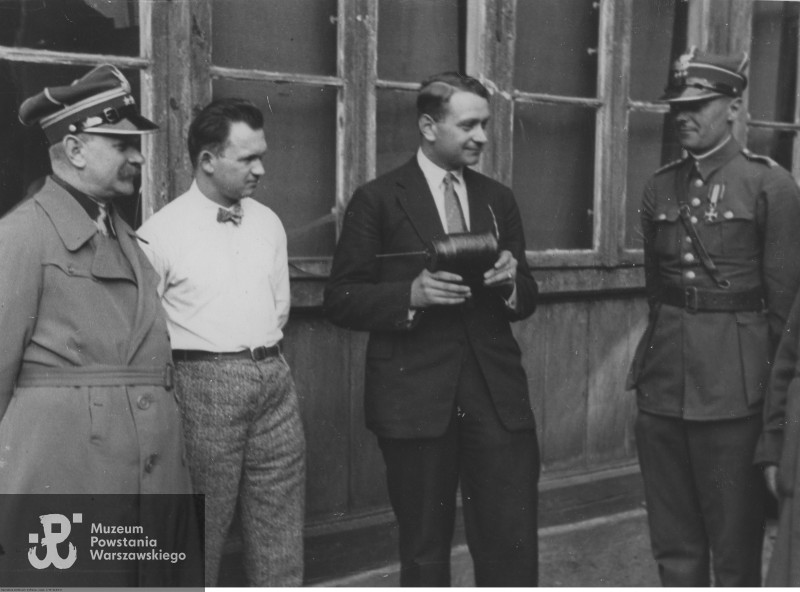
Standing from the left side: Colonel Pluciński, an unidentified person, engineer Michal Gonczaruk, Captain Stefan Witkowski. Photo from 1931 taken by Leon Jarumski/ from the archives of the National Digital Archives NAC
Mańkowska’s greatest spy work achievement was still ahead of her. In July of 1941, a officer she became acquainted with on a train headed for Warsaw, invited her to a dinner. Officially he is called Wallraf Hans Alexsander and he is an agent of German Intelligence. From his superiors, he believed that the countess had a pro-German stance, which had been further proved to them with her work on the French Island, from this he arrives with the proposition of working in the Abwehr. The offer was accepted without any hesitation. From that moment Mańkowska became a double agent.
Klementyna begins work in the German Ministry of Foreign Affairs, as part of her training to become an agent for the Abwehr. After finishing her training she will be sent to England. There is little time, but Klementyna does not disappoint her superiors, she quickly learns how the cipher machine works, gets to know the codes, central addresses, and the pseudonyms of all the liaison officers of the Abwehr in London. After finishing the course, taking on the identity of an Italian countess she is taken to a town in Saint-Avertin, not too far from Tours, where she has at her disposal a large villa along with staff. Not even a month later, there is a meeting in Tours which Klementyna will never forget until the day she dies. She is secretly visited by Captain von Bonin, he asks is they could have a conversation, which has to be kept secret. This aged prematurely, dressed in a faded uniform man, tells her that he is being sent to England nor as an agent, but to give the British a message, that within the Wehrmacht there is a strong anti-Hitler opposition, that has no illusions that the German nation is being run by a madman straight into catastrophe. To stop this from happening, he is planning to take over leadership in Germany, and to ally with the West creating an anti-Communist coalition.
Before carrying out a final mission, under the pretext of visiting her mother, Klementyna takes time off, leaving for Poland. She visits her mother at the family estate in Wysucza, trying to convince her to leave the country. Her mother however declines leaving with her mother, arguing that she has to wait for the return of her husband, who has been arrested by the Soviets. Coming back from Podole, Klementyna final time meets with Witkowski in Warsaw, where she receives one last mission.
On the 9th of February, the Countess leaves Noirmoutier forever and goes ahead on her last mission, through Paris, Nice and Lisbon, after four months she arrives in England. On the 4th of May 1942, she lands at the airport in Bristol. Where she is immediately stopped by the MI5. That same day the Radio BBC, informs about her arrest.
In London she enters the Royal Victoria Patriotic School. This 19th century school that was taken over by the MI5 in 1941, it was intended as an internment place for refugees, particularly Axis spies. Klementyna finds herself in comfortable surroundings, she is able to live their with her sons, she was even given permission to move freely around the grounds. For four weeks five hours daily, she is questioned by captain Malcolm Scott, who speaks Polish very well (his family before the war had a sport store in Lwów). Klementyna tells with detail the circumstances of her recruitment by the Abwehr, she also gives him all the information she had gotten during her training as well as the tasks she was to fulfill while on the territory of England.
On one of the photographs shown to her by Captain Scott, she recognizes Captain von Bonin, who she finds out to be in actuality the head of Abwehr, himself Wilhelm Canaris. It is actually Canaris who had directly organized and sent her on the mission to England. At the end of the questioning Captain Scott give her friendly advice: ‘’Ma’am it is best that you leave London as quickly as possible! ‘’Musketeer’’ agents, are considered by your countrymen to be Abwehr spies, and are not welcome here’’.
A second warning was given to her by General Sosnkowski, the future Commander-in-Chief of the Polish Armed Forces. During a dinner, organized in London by the Count and Countess Puslłowski, he warns her about an assassination attempt by the II Department of the Home Army, which did not approve of Witkowski’s direct contacts with MI5, and recommended eating hard-boiled eggs because… they were harder to poison. Mankowska would receive similar warnings against an ‘’unfortunate accident’’ from Krystyna Skarbek and her close friend Teresa Lubieńska (both agents, who worked for British intelligence during the war, would be later stabbed to death after it.
Taking the advice to heart, Mańkowska leaves London and goes to Scotland. Thanks to an old surgeon friend from Winna Góra, she gets a job as a secretary and translator for the director of the Ignacy Paderewski Hospital in Edinburgh. Her children are studying at a boarding school, and her husband Andrzej due to work obligations stays in London, but visits his wife often. Soon after the family becomes enlarged by the birth of another member, daughter Maria Izabella who is born on the 20th of June, 1944.
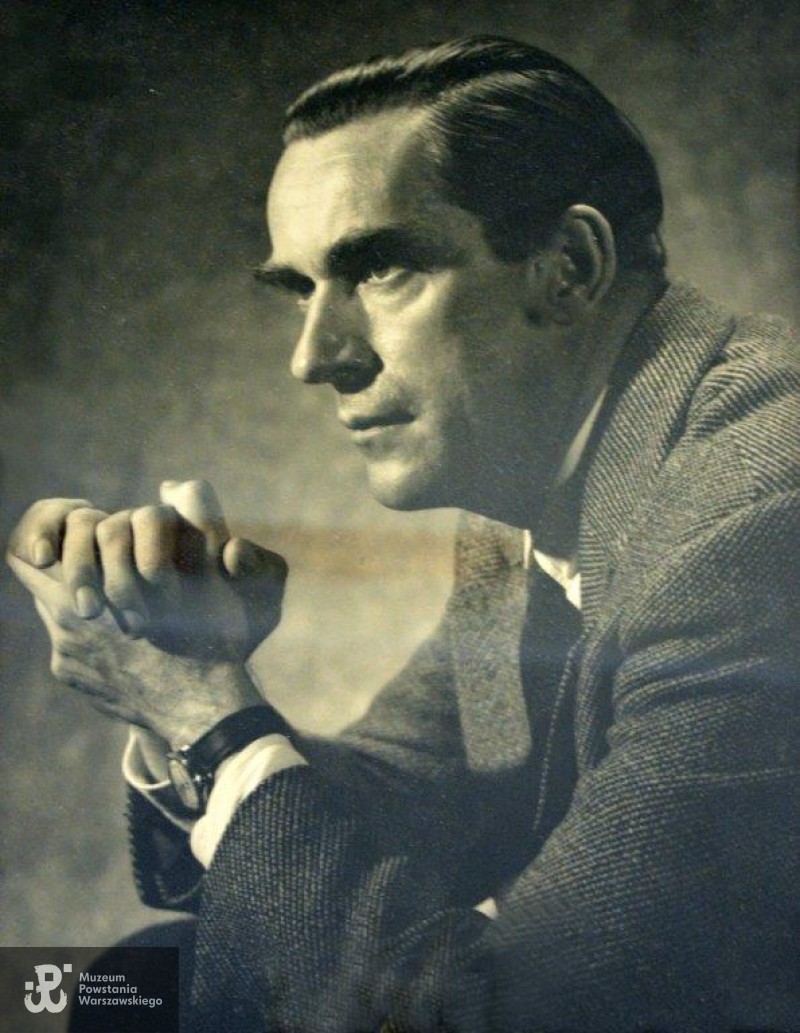
Andrzej Mańkowski. The husband of Klementyna Mańkowska, photograph from the family archives of Krzysztof Mańkowski, courtesy of the Museum of the Landed Gentry in Dobrzyca
As the war is coming to an end, the entire family is awaiting with great yearning the moment when they can return home to Winna Góra. Unfortunately, they shall never again see their home. The estate is confiscated by the state authorities, and a return to Poland, under communist control would be akin to suicide for them all.
In 1948 in the hospital in Edinburgh was closed, and Klementyna constantly harassed by Polish intelligence decides to leave Scotland. The entire family move to Congo, then a Belgian colony where they would spend 19 years. They leave as stateless, with UN passports. They did not have Polish passports, and the Polish government prevented them from receiving British documents.
In 1953, the Mańkowskis visit London, during the visit Klementyna is awarded by General Tadeusz Bór- Komorowski with the Sliver Cross of Merit with Swords for her activity during the war. Unfortunately, the same General ‘’Bor’’ had personally blocked earlier British initiative of giving her the Order of St George. For Poles the fact that she worked for the Musketeers, it became a problem in recognizing her completely for her spy activity during the war.
In 1967 the Mańkowskis leave Congo and they move to France, a large estate awaits them in Noirmoutier, which the authorities of the town handed over to the Countess in 1963 as a token of gratitude for everything she had done for the residents. During the war Klementyna’s contacts helped the authorities, registering documents, or even allowing a larger number of fishermen at sea than regulations permitted which was their only source of livelihood.
Mańkowska’s war effort received praise in many countries. In May of 1996 the President of France Jacque Chirac awarded her with the National Order of Merit, and in September of 1997, the President of Germany Roman Herzog awarded her with the Order of Merit of the Federal Republic of Germany, recognizing her effort during the war as well as her contribution to Polish-German reconciliation.
Countess Klementyna Mańkowska died on the 4 of January in 2003 at Castle Sermoise-sur-Loire, near Nevers at the age of 93. Outliving all her fellow war companions.
At the age of 80 years Klementyna Mankowska wrote down her war memoirs, titling it ‘’Moja Misja Wojenna’’ (English: My Wartime Mission). The first Polish version of her memoire was published in 2003, subtitled: ‘’Without Fear or Hatred’’. In her family homes she was raised to live without being guided by fear and to treat people with kindness and nobility. All her life she would always mention this phrase that: ‘’In every person there is good, some just live in bad times…’’.
_____________________________
Article by Monika Stasiak
Translated from Polish by Klaudia Szymonik