


During the Warsaw Rising, German forces mercilessly slaughtered civilians. In one of Warsaw’s most magnificent buildings – the Grand Theatre – one of the most harrowing dramas of those weeks unfolded. On 8 August 1944, the rattle of machine-gun salvos echoed through the building’s ruins, killing around 350 men and boys.
“I was 11 years old. We lived with my mother, father, and sister in an apartment at 5/7 Focha Street, apartment 24, in Warsaw.
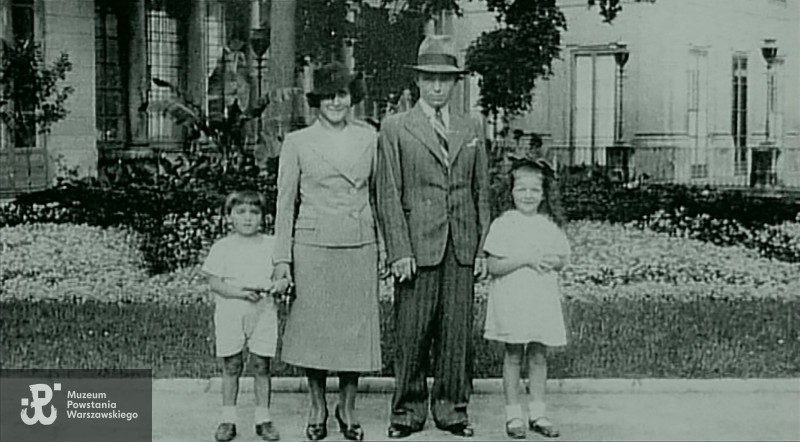
Photo: The Świątkowski family. Source: “The Battle for Warsaw”, 2005 (directed by Wanda Kościa).
When the Warsaw Rising broke out, my father was not with us. He was near the Pfeiffer Tannery in the Wola District. He joined us a few days later. By then, we had already taken shelter in the underground corridors beneath the ruins of the Grand Theatre. These were long, wide, empty, and dry corridors located two levels underground, closer to the stage. Similar corridors above us served as warehouses for stage equipment. There was also an entrance in the Main Hall of the Theatre leading to yet another level of corridors beneath our shelter.
In these underground corridors, which became our shelter, several hundred civilians from nearby buildings had found refuge. We had no contact with either the Insurgents or the Germans. We saw neither of them.
Whenever anyone tried to reach the ground floor, we could hear multiple shots and detonations, along with the howling of aircraft engines. Through openings, we saw smoke rising from burning houses.
On the sixth or seventh of August, we were woken by explosions that struck the steel doors protecting our shelter. Shrieking German soldiers stormed in. They began beating and shoving us while demanding to know where the Insurgents were, asking for our papers, and searching for weapons. They found no arms, so they only looted gold jewelry. The ordeal lasted for many hours. The next day, the Germans dragged us out of the shelter and forced us to stand under the Theatre’s pediment columns. There was a large crowd of people — men, women, and children. German soldiers stood behind us, next to the columns. Suddenly they started shooting, screaming, and beating us, pushing the crowd toward the Town Hall and the Blank Palace. People were running, howling, and shrieking. That shriek of pure terror is something I will never forget. It was chaotic shooting. Grenades and bundles of grenades (wrapped with wire) exploded among the people. The Insurgents were throwing grenades from the windows of houses on Focha Street. (In one of those houses there was a stationery shop where I used to buy notebooks for school. Above the shop hung a huge banner — ILCZUK.)
I tore myself from her arms and ran to find shelter under a tram car abandoned nearby. First, I climbed inside, then I moved underneath toward the undercarriage.
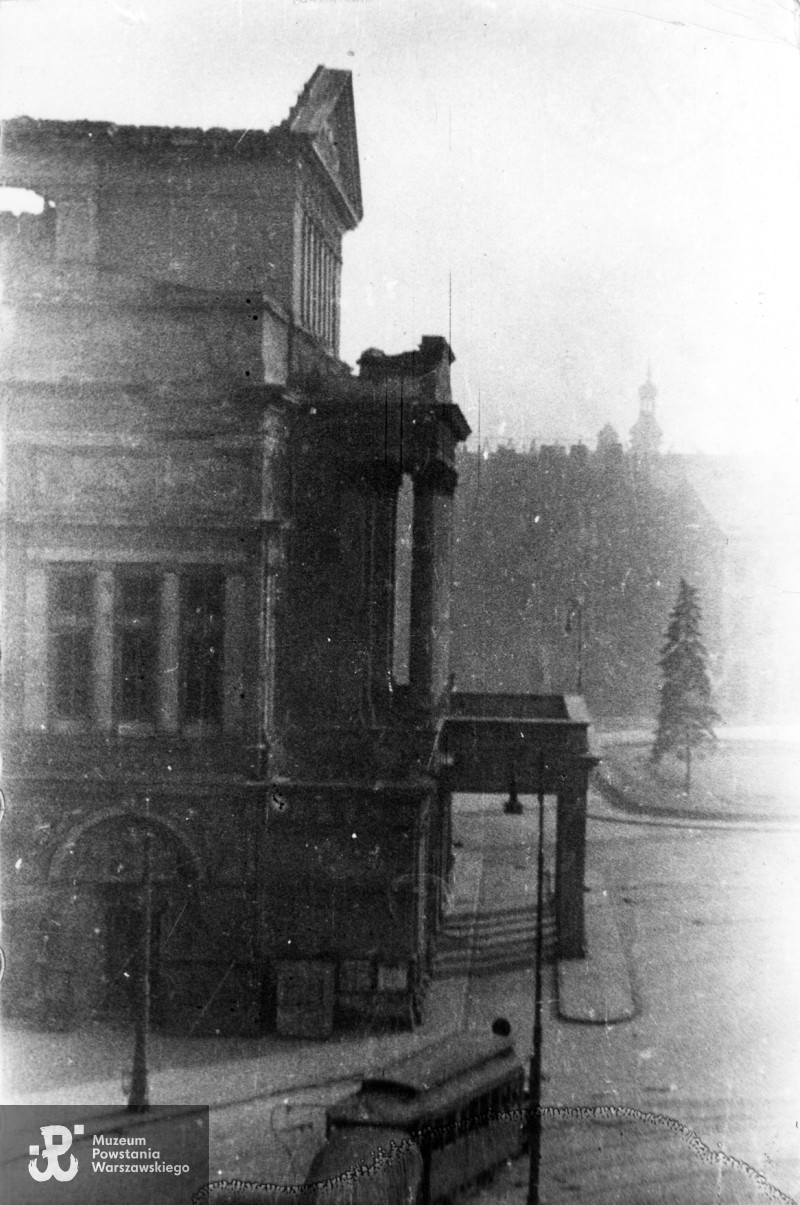
Photo by Józef Jerzy Karpiński „Jerzy” (beginning of August 1944). A tram car where Marian Waldemar Świątkowski might have found shelter underneath. Photo source: Warsaw Rising Museum Collection.
The Insurgents repelled the attack. The Germans, as before, regrouped near the Theatre columns and once again forced us to stand in front of them. After some time, we were pushed forward again toward the Insurgents’ positions.
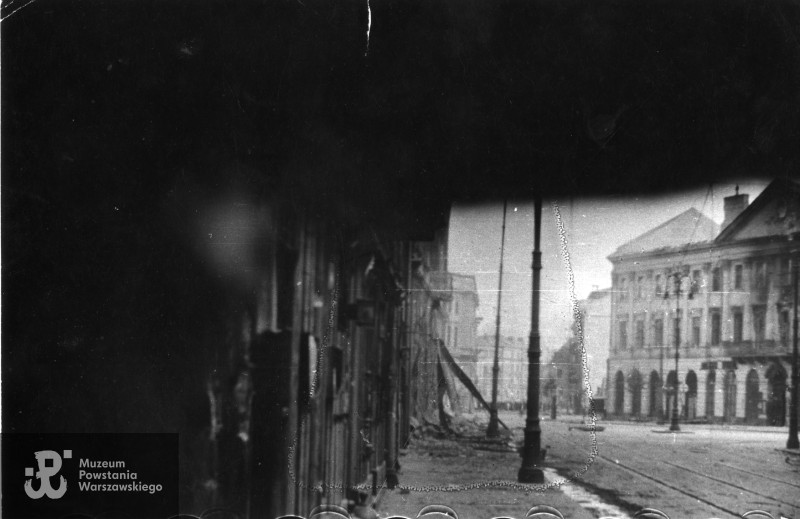
Photo by Józef Jerzy Karpiński „Jerzy” (first days of August 1944). View of Bielańska Street seen from behind the barricade at the exit of Daniłowiczowska Street, looking south. In the background on Wierzbowa Street, a line of civilians is visible. Marian Waldemar Świątkowski was one of the civilians. The Germans attempted to launch an attack on the insurgent positions under the cover of this human shield. Photo source; Warsaw Rising Museum Collection.
The fighting grew more intense, and the massacre claimed many more lives. I climbed back under the tram car and hid close to the undercarriage. However, my sister, who was one year older than me, remained among the civilians the Germans had gathered to storm the Polish barricade. She managed to reach the other side of Theatre Square and crossed over to the Polish side of the barricade at the junction of Senatorska and Daniłłowiczowska Streets.
What happened to her next is difficult to tell. She does not want to talk about it. She found my mother and me again in December 1944. She was in a terrible emotional state. It turned out that after escaping the Germans — having been used as one of the human shields pushed across Theatre Square toward the Polish barricade — she had found shelter under the Ministry of Agriculture and in the basements along Kozia Street. The group she stayed with suffered from severe famine. They probably witnessed scenes of rape and cannibalism. They left Warsaw “when there was already snow”.
The second German attack on the Blank Palace and the Town Hall was also repelled. A short cease-fire followed. The Germans then forced us to carry their wounded and warned us that we were not allowed to help wounded civilians. There were many dead bodies lying around. A German soldier ordered me to carry a large military bag belonging to a wounded soldier who was being carried without a stretcher by four Poles. The wounded man screamed constantly. He was taken to the Brühl Palace, where other soldiers took care of him. We, in turn, were insulted with shouts of “Polnische Banditen!” and received kicks. The beating stopped when the German soldier who had led the transport of the wounded reappeared. He ordered us to bring more wounded. I did not fulfill that task. Instead, I sneaked into the ruins of the Grand Theatre from the Trębacka Street side. I remained hidden there for a long time. When it grew dark, I returned to our shelter, which was again full of people. I managed to find my mother and father. My sister was still missing. We were in despair, convinced she had perished during the fighting near the barricades at Theatre Square.
At night, the Germans entered the shelter again. Once more, the beating, searching, and looting of gold jewelry and wristwatches began. German soldiers started dragging young women deep into the shelter. The women screamed and tried to defend themselves. Single shots were heard later. A German soldier also took my mother. She was screaming as she was dragged away. He hit her and pushed my father aside. My mother shouted that she was wounded and sick, pointing to the blood on her dress and underwear. The German kicked her and took another woman instead. My mother was not actually wounded — her dress was stained with blood because she had been carrying wounded German soldiers across Theatre Square earlier that day. We survived that night, although German soldiers returned several times.
The next day, the Germans chased us out of the shelter into the Main Hall of the Theatre on the ground floor. The hall was packed with masses of people. An elegant German officer delivered a speech. I remember him wearing breeches and long black. Our neighbor from Focha Street 5/7, a Volksdeutsche named Anna Richter (or Rychter), who lived on the first floor with the entrance from the gate, served as his interpreter.
First, the men would be transported. A selection followed. Men were separated from women with children. I tried to stay with my mother, but Mrs. Rychter ordered me to join my father. She pointed out that other boys were standing with their fathers. Indeed, my friend Mietek Suliga (or Seliga) was among the men. The Germans calmly led us through the main entrance to the left, near the Bogusławski Monument, toward Wierzbowa Street. I saw a large group of male civilians standing in three long rows along King Albert Street (now Niecała Street).
The German soldiers then ordered us to enter the Theatre building through a small entrance on the corner of Theatre Square and Wierzbowa Street. We were directed up a spiral staircase to a ruined large hall on the first floor. There was no wall on the Theatre Square side. The Town Hall was in flames. So was the house on the corner of Bielańska and Senatorska Streets. On the ‘O’ level of that building there was a shop with a huge banner: “Krzysztof Brun i Synowie”.
The floor on the left had collapsed, forming a kind of cliff. The hall was filled with men. It was noisy as people looked for anyone they knew. There were only a few German soldiers — perhaps ten — shouting to impose order, but it did not work. Suddenly, the Germans began shooting at close range into the crowd. Many got dead and wounded. Total silence fell. The Germans ordered that the dead and wounded be thrown down the shattered edge of the floor.
We had to form loose rows. The Germans walked silently among us carrying a large willow basket for coal. It looked new and had a square base, unlike the round baskets common today. They demanded documents, which they threw into the basket. They looted small parcels that almost everyone carried, along with wristwatches, wedding rings, and signet rings. My father handed over his wallet from his jacket, his golden Omega watch (which his friends had always admired), and a golden cigarette case. A German soldier forcibly removed my father’s wedding ring and signet ring from his fingers. I was standing with my father. The German soldier ordered me to give him a large women’s handbag that my mother had asked me to carry before we were separated. Inside were the most precious items we still possessed. When I hesitated, the German tore the bag from my hands. I fell backward, and he struck me hard with his rifle in the thigh, very close to my crotch. The bruise and deep hematoma took several months to heal, but at least I could still walk.
When the Germans finished robbing us, silence fell again. They formed the first row of men right along the edge of the collapsed floor. The men stood looking back toward us. Then, the Germans suddenly disappeared.
Suddenly, a long machine-gun burst came from the Theatre Square side — the side where the front wall was missing. Many men were wounded or killed. Some fell over the edge of the collapsed floor. The wounded, writhing in agony, crawled toward us and screamed for help. The Germans shouted at some Poles standing in the next row and forced them to throw the wounded and the dead down the “cliff.” I was standing with my father in that row.
Calmly, he said to me: “Go away” and released my hand.
He did not say “run away”. He said “go away”. Those were my father’s last words. Slowly, I retreated to the back. I passed my friend Mietek Suliga, who stood as if frozen. I also passed Mr. Piątkowski, our neighbor from the first floor, who was standing motionless too. I moved toward the rows of men at the very back. The Germans did not notice me — they were busy throwing the wounded and the dead down ‘the cliff’. There also seemed to be some commotion at the machine-gun position near the Bogusławski Monument. It looked as if one German soldier was vomiting. There was a tank (or an assault gun) and a small group of soldiers nearby.
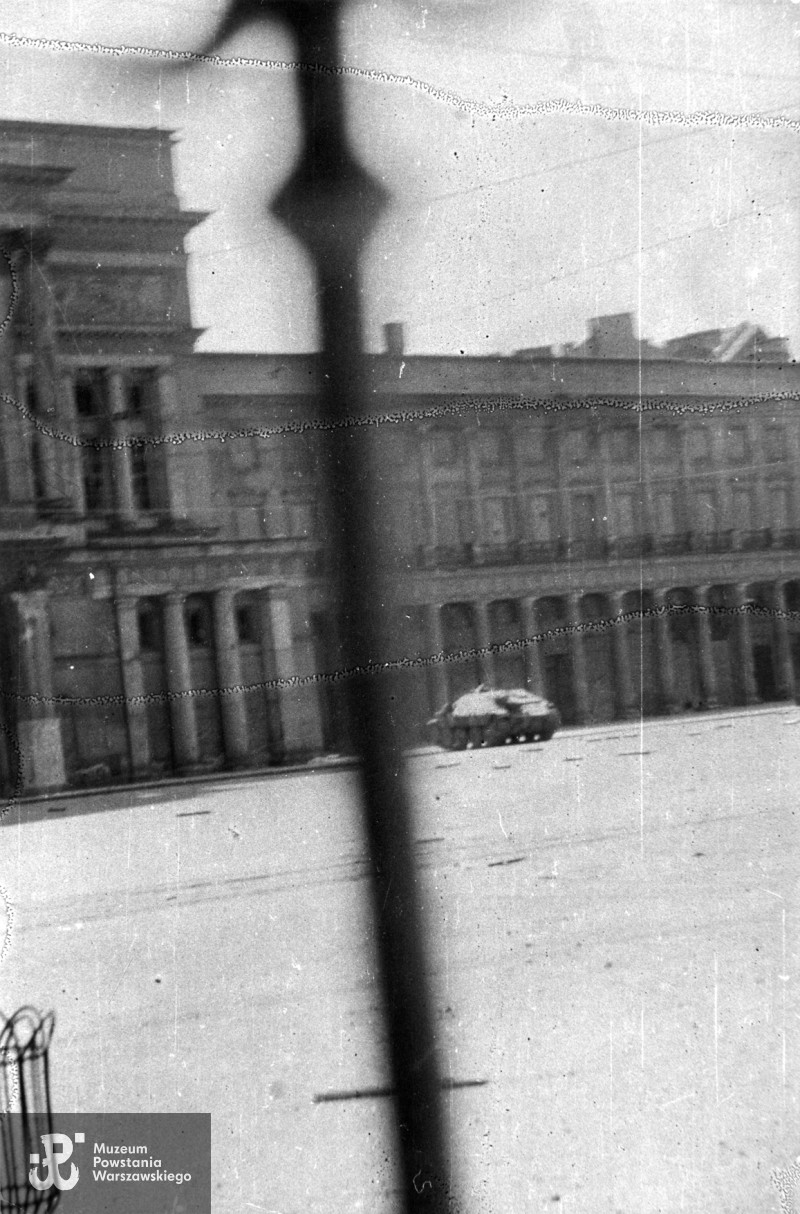
Photo by Józef Jerzy Karpiński „Jerzy” (beginning of August 1944) illustrating an assault gun that was also spotted by Marian Waldemar Świątkowski when he was “leaving” the Grand Theatre. Photo source: Warsaw Rising Museum Collection.
Then, I sneaked into the ruins. I knew them well because we had lived nearby. My friends and I had often played there — war games or hide-and-seek. I found shelter in a hole under a staircase in the rubble. No one followed me. Only the dull thuds of gunfire reached my ears. I fell asleep. When I woke up, there was an overwhelming silence. I hesitated for a long time before I finally came out”
* * *
Franciszek Świątkowski[1], who was ruthlessly executed together with 350 Poles by Germans inside the Grand Theatre on 8 August 1944, was 39 years old. According to family accounts, he was a self-made man — a successful shoemaker and entrepreneur who moved with his wife from the small provincial town of Szreńsk (population around 2,000 in the 1920s) to the bustling metropolis of Warsaw (over a million inhabitants at
the time). There, they built a comfortable life that allowed both of their children to receive a good education.
The photo below captures one of their blissful moments together: Franciszek standing in the centre, his wife Aniela on the right, and their children — Marian Waldemar and Józefa Franciszka — sitting on the branch above.
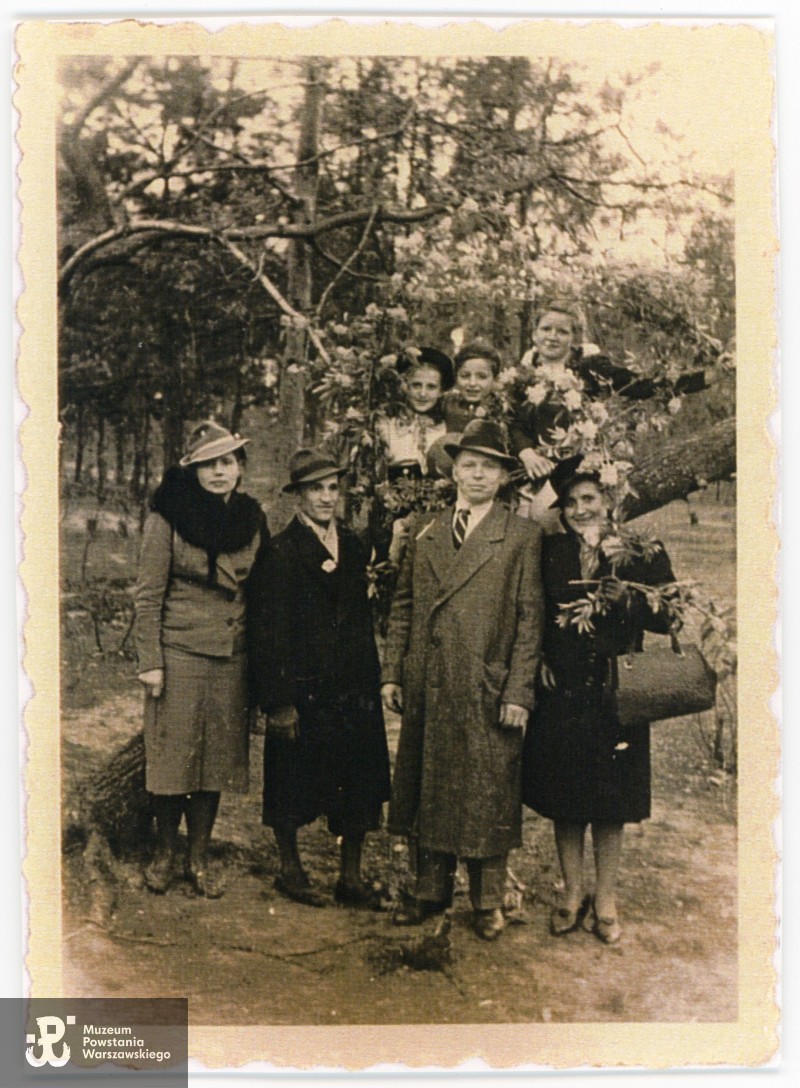
Photo source: Aldona (née Świątkowska) and Tomasz Mater Family Archive.
Aniela and the kids miraculously survived. Aniela with her son were expelled to a transit camp (Dulag 121) in Pruszków and later deported outside Warsaw. Józefa, Franciszek and Aniela’s daughter, after horrifying experiences[2], was found in late autumn, as was mentioned in her brother’s testimony above.
Franciszek’s remains were identified on 20 April 1945. The painful exhumation took place in the presence of his devastated wife Aniela and their 12-year-old son. Lying with his body was his wallet, still containing several personal documents. The family kept these sacred relics for decades, carefully preserving them in a sealed glass jar — a silent, heartbreaking link to the husband and father they had lost so suddenly.
When the Warsaw Rising Museum opened for public in 2004, Marian Waldemar Świątkowski (Franciszek’s son) donated the jar with its contents to the Museum Collection and it’s been exposed for visitors at the first floor (Part: The Death of the City) since.
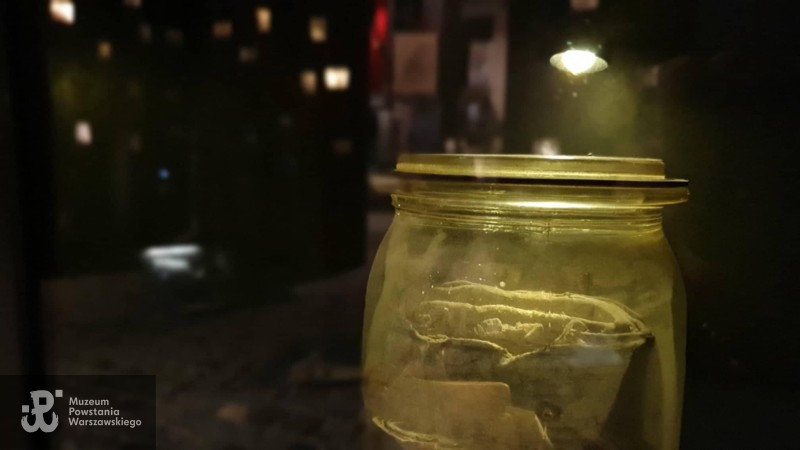
After several years, in December 2025, the jar was opened and every item inside was carefully photographed for posterity.
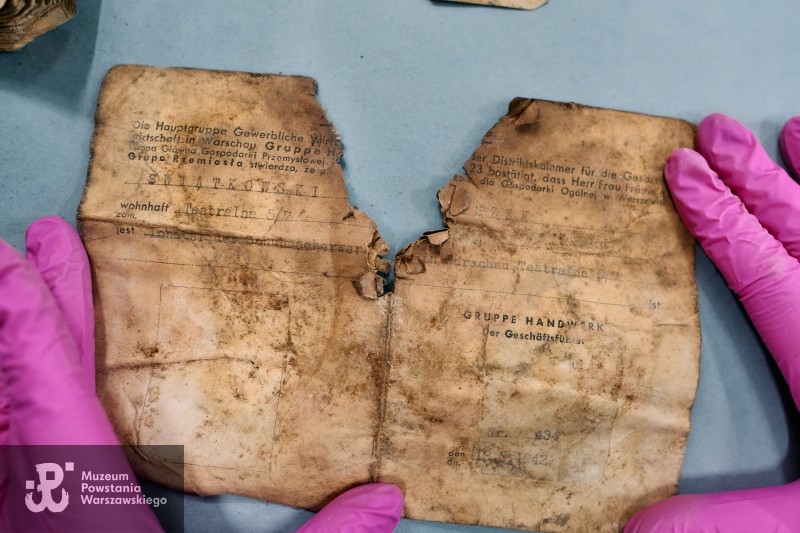
It turned out that Franciszek Świątkowski carried a number of documents in his wallet confirming he was a shoemaker. He was a member of the Warsaw Shoemakers Guild and was also registered with the German-controlled craft organization “Gruppe Handwerk” during the occupation of Warsaw (1939–1944). Although his photograph has faded over the years, his identification card remains perfectly legible.
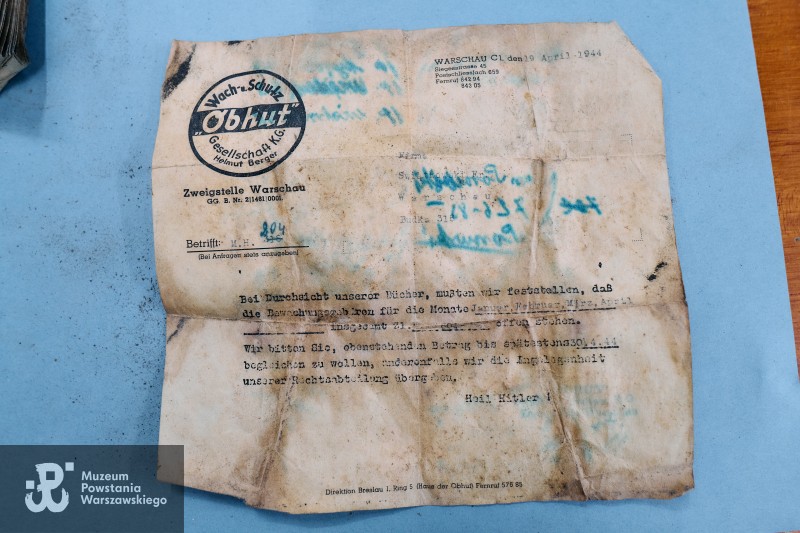
Most of the papers come from 1943 and 1944. The one presented below is a proof of excellent German bureaucracy. It is a formal payment reminder (dunning letter) from the German security company „Obhut“ Wach- und Schutz Gesellschaft K.G. Note “Heil Hitler!” at the bottom of the document that kindly asked (“Wir bitten Sie”) to “clear the arrears”.
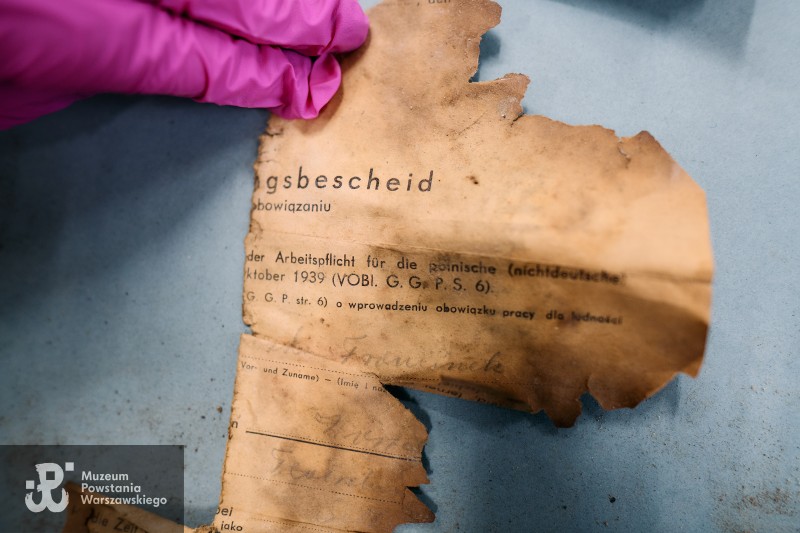
Nowadays, in the Western political and historical debate, term “Nazi” is applied to anything that relates to Hitler’s dominated Germany. Here, we can clearly see that Germans did not call them Nazis and used the term “Deutsch” (German) to denote themselves. Note the document below and the upper right corner where Poles are referred to as non-Germans (“nichtdeutsche”).
Mr. Marian Waldemar Świątkowski (1933-2013) became a neurosurgeon. He sought justice after all his family had endured.
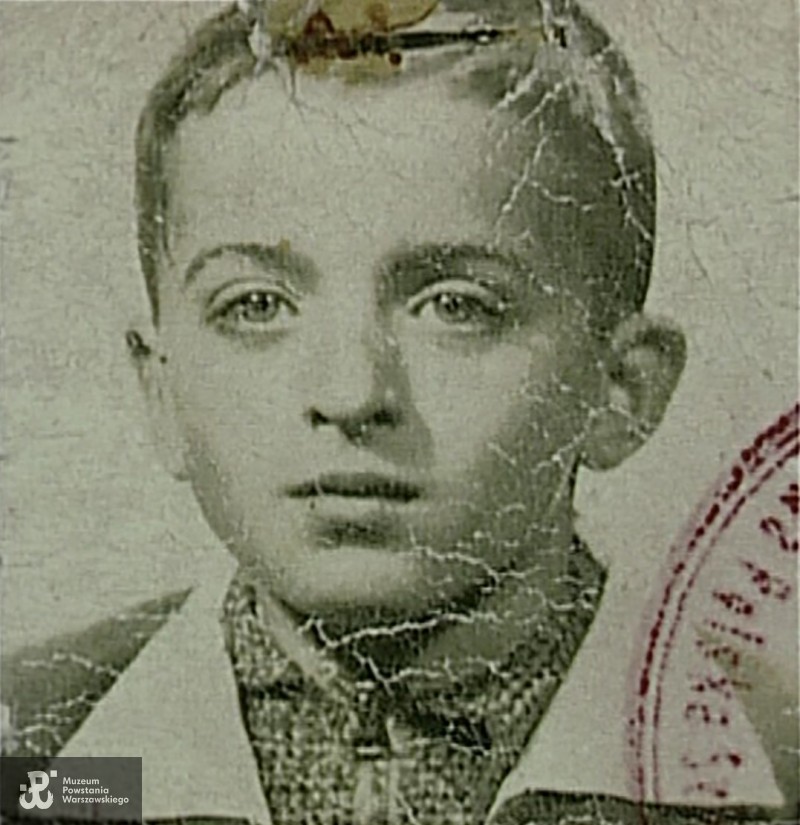
The photo of Marian Waldemar Świątkowski (from World War II period). Source: “The Battle for Warsaw” (directed by Wanda Kościa, 2005).
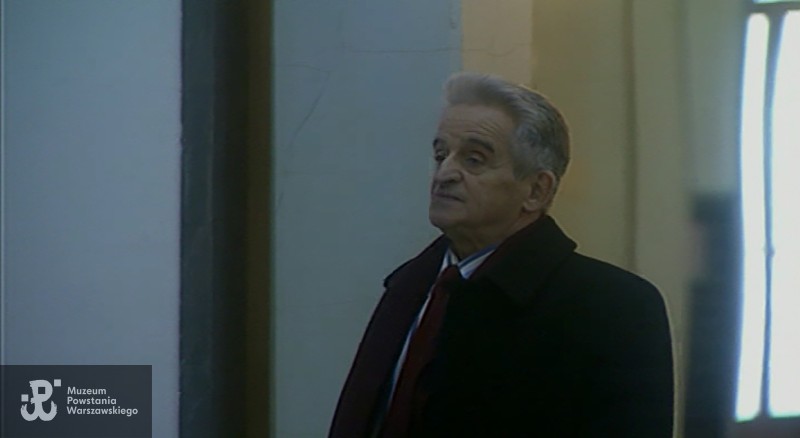
Marian Waldemar Świątkowski during the filming of the documentary “Battle for Warsaw” (directed by Wanda Kościa, 2005) inside the Grand Theatre in Warsaw, at the site of the execution where he lost his father on 8 August 1944.
German archives in Ludwigsburg - The Central Office of the State Justice Administrations for the Investigation of National Socialist Crimes (Zentrale Stelle der Landesjustizverwaltungen zur Aufklärung nationalsozialistischer Verbrechen) and the prosecutor's office in Coblenz were addressed for help. To no avail. In 2013 his case and an investigation[3] led by the Institute of National Remembrance (IPN) were discontinued.
Lawyers repeat that only those for whom there was proof that they had committed the murders themselves could have been put on trial. The identity of perpetrators who were members of the firing squads seems impossible to be confirmed now. Victims and their families have had to face their trauma completely alone, and they still do. No justice whatsoever. The wounds refuse to heal.
---
[1] https://www.1944.pl/ofiary-cywilne/franciszek-swiatkowski,47106.html
[2] https://www.1944.pl/archiwum-historii-mowionej/jozefa-franciszka-stepniak,3260.html
[3] https://www.rp.pl/swiat/art16653581-zbrodniarze-bez-kary (accessed online on 30 April 2026)