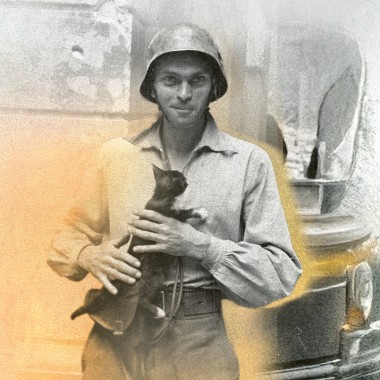



Zbigniew Leszek Grzywaczewski is the author of 33 photos that depict the Warsaw Ghetto Uprising. He was a Polish firefighter who sneaked his camera into the Ghetto to document the agony of the Jewish district of Warsaw in April and May 1943. One year later he took part in the Warsaw Rising (1 August 1944 – 2 October 1944). What is his testimony?
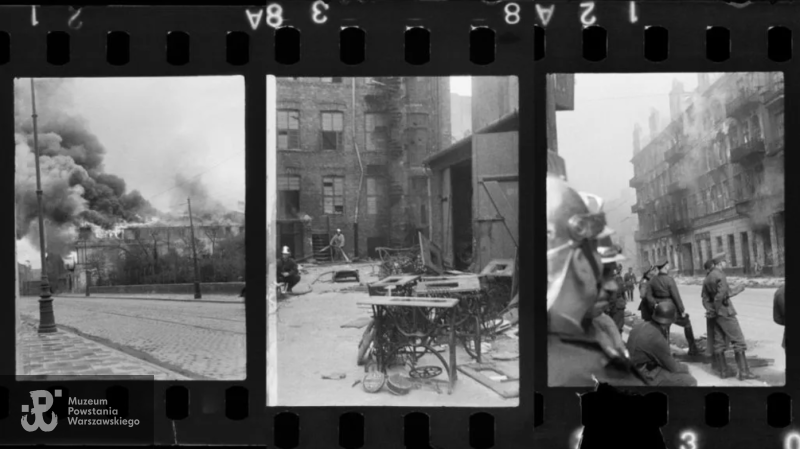
Photos of the Warsaw Ghetto taken by Zbigniew Leszek Grzywaczewski.
Source: Press materials by HBO Max
The photographs were discovered over 80 years after WW2 and 30 years after Grzywaczewski’s death. An HBO Max documentary “33 photos from the Ghetto” released on 27 January 2026 tells the story of this unique discovery. In order to know more about this brave man, let us present some excerpts from his memoirs immortalized in the book he wrote after WW2.
Grzywaczewski was born in 1920 in Warsaw and was a classmate of the legendary Batory High School students: Jan Bytnar, Aleksy Dawidowski, Tadeusz Zawadzki and K.K. Baczyński who were tragically killed in WW2.
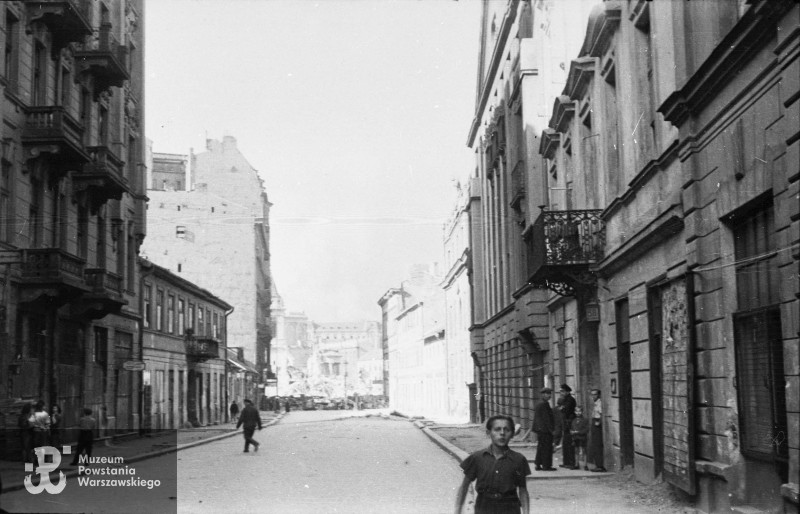
On the left the house at 65, Mokotowska Street where the Grzywaczewski Family had their apartment. The house was a lone survivor in the sea of ruins after the end of WW2.
The photo was taken at the beginning of September 1944 by Marian Grabski “Wyrwa” // Warsaw Rising Museum Collection
He dreamt of a maritime career but his dreams had to wait till the beginning of 1950s. During WW2 he joined firefighters and became a member of the Polish underground.
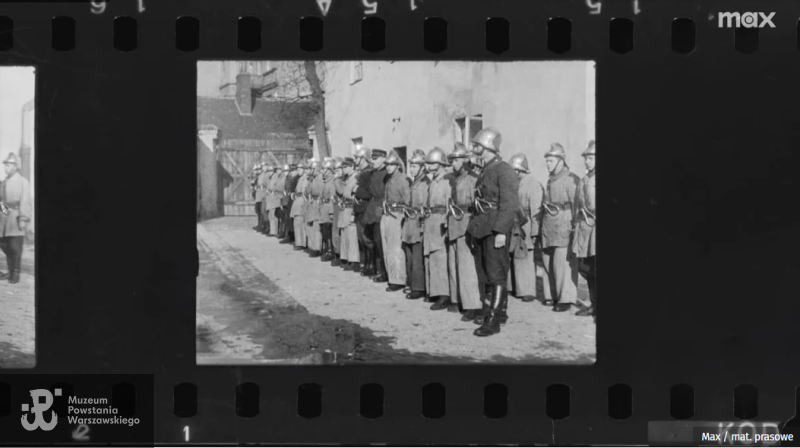
Zbigniew Leszek Grzywaczewski was one of the Warsaw Firefighters.
Source: Press materials by HBO Max
When the Warsaw Ghetto Uprising broke out on 19 April 1943, his firefighter team was sent to protect the buildings and keep the fires from spreading to other parts of the city. Thus, Warsaw firefighters were silent witnesses how Germans use fire to suppress the Jewish resistance. They were banned from extinguishing the blazes.
“House after house, street after street and district after district, were systematically burnt down. (…) Almost everyday we witnessed scenes that filled us with terror. (…) I saw groups of Jews, their escape route cut off by flames, rushing to the upper floors and when the flames reached them, they chose to escape death in the flames and jumped outside. After a dramatic fall, their arms and legs broken, they would slowly die in pain. We were banned from offering any help even though as firefighters that was our mission and duty. Unfortunately, we were under constant surveillance by the German police and SS and any act would have had dire consequences. Almost everyday we saw an SS general who oversaw the liquidation of the Ghetto. He was a war criminal and his name was Jürgen Stroop.”
One year later, on 1 August 1944, the Warsaw Rising starts. Grzywaczewski sees the annihilation of his city again. He witnesses direct fighting in the Wola District, the Old Town and the City Centre (Śródmieście).
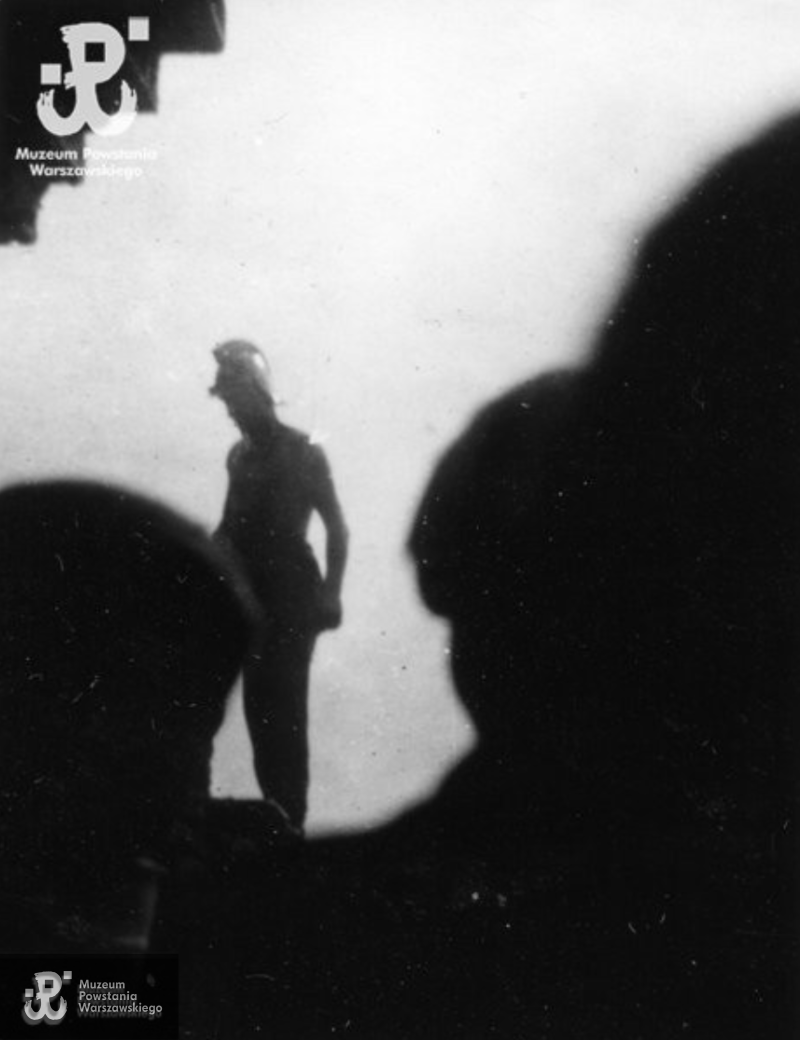
A fireman during the Warsaw Rising. Photo by Edward Tomiak // Warsaw Rising Museum Collection
“We were constantly struggling against fire. We attempted to dig up people buried alive under the rubble. We were troubled by regular Stuka dive bomber raids that would appear at a precise time in the Vic formation. They circled above our area - mostly the Old Town - and after releasing bombs, they disappeared to come back again.”
Saving people who were trapped in collapsed buildings was rewarding yet rare experience. In Grzywaczewski’s book there is a vivid description of a rescue mission of tree people, namely a soldier, his fiancée and his mother who called for help squeezed under the floor that collapsed diagonally after shelling.
“There was no other way than reach them through the basement. We had to dig a hole in the ceiling of the basement to get to them.”
Before the Old Town fell, Grzywaczewski entered the sewers and led a group of people out of the hell of the burning Old Town.
“After 4,5 hours we reached the manhole at Warecka Street (…) We were taken to the “Napoleonka” Café. The floor was flooded with a thick layer of sewage that was slowly running down our bodies (…)”
The house at 17, Jerusalem Ave had a hidden entrance to a tunnel that served as communications route between two parts of the city joined only by the barricade across the Jerusalem Avenue. On 11 September 1944 Grzywaczewski and Sgt. Brzeziński saved this essential outpost from totally burning down. They engaged many civilians to form kind of “a water pipeline” where buckets with water moved quickly from one hand to another.
On 19 September 1944 Grzywaczewski’s five men team were busy putting down a fire that was devouring a two-storey house at Mokotowska 64 having only a few barrels of water, a sand box, a few buckets, shovels and fire axes. The house is still standing though after they had finished, the building was shelled from a grenade launcher. A shrapnel wounded Grzywaczewski’s heel. His friends decided to quickly take off his boot and take him to a medical point nearby. On their way they laughed and joked: “You’re lucky not to be Achilles as you would be already dead!”.
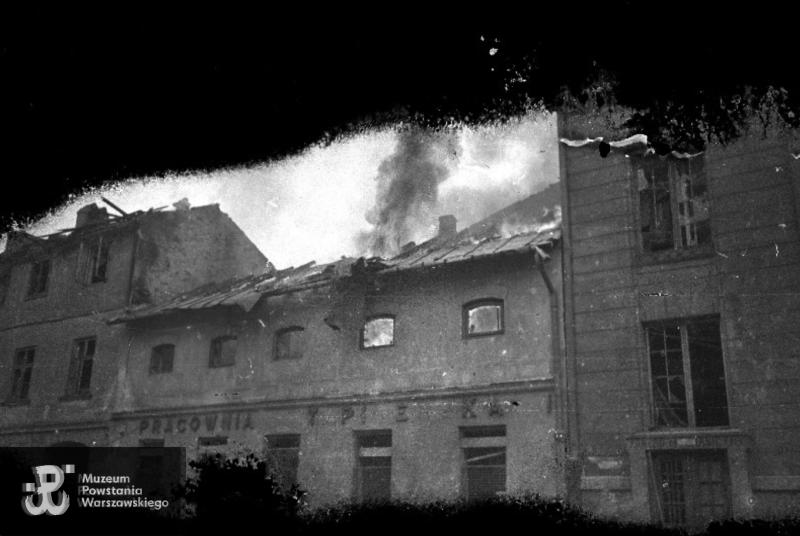
A two-storey building at 64, Mokotowska Street photographed on the day Grzywaczewski’s team saved it from burning down. The banner on the façade confirms it was Edward Wernik’s Upholstery workshop. Photo by Joachim Joachimczyk // Warsaw Rising Museum Collection
On 26 September 1944 Grzywaczewski enjoyed a delightful dinner with the other firemen. ‘Finally, some meat!’ – they could not believe their eyes. Menu consisted of a broth, a piece of meat and some bread. Chit-chatting, Grzywaczewski mentioned that his parents were truly missing a dog named Bill that had mysteriously disappeared a few days before. They were worried because their friends asked them to look after the dog. “Seems we’ve just eaten Bill for lunch, bro!”, the cook remarked…
When fighting ceased in the city, Grzywaczewski and another wounded fireman were transferred to a building near Puławska Street. He underwent surgery on his left heel. The Germans reorganized the firefighting teams he served in and formed a Räumungskommando (räumen - to evacuate, clear, move out), though the Poles renamed it quickly to “Räuberungskommando”(rauben – to steal, rob, take away). While Grzywaczewski was healing his wounds, his mates witnessed executions orchestrated by Germans and the organized looting of the possessions left by the expelled inhabitants “redirected” to the Third Reich.
Zbigniew Leszek Grzywaczewski was sent out of Warsaw in late autumn and returned in winter 1945, then lived in Katowice to finally settle down in Gdańsk. When the war ended he could marry the girl he loved and set sails. As he dreamed of.
Sources:
Grzywaczewski Zbigniew, Jerzy Stahl-Stal, Wspomnienia Strażaków Uczestników Powstania Warszawskiego, Warszawa 1992 r. [The Memoirs of firefighters who participated in the Warsaw Rising 1944].